
















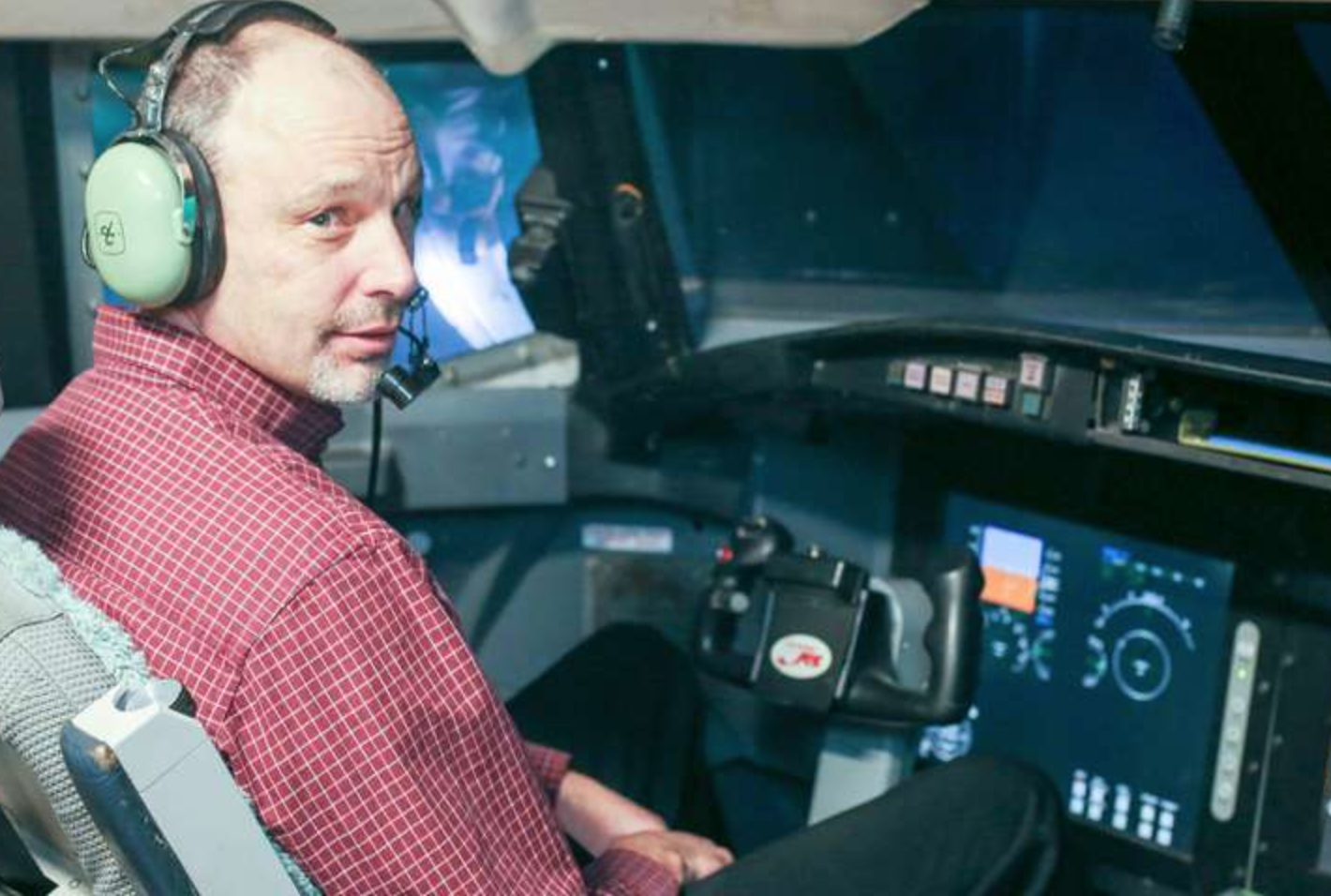
Researchers at the University of Toronto have developed new simulations that they believe will help pilots to better recover when faced with an aerodynamic stall. “Part of the challenge is that pilots are often trained on simulations that take an aircraft right up to the point of aerodynamic stallbut not past it,” said Peter Grant, a professor at the university’s Institute for Aerospace Studies. “Most commercial flight is on autopilot, until or unless the situation becomes critical. Suddenly, the autopilot switches off and we’re putting pilots in a position where they need to take over under the worst possible circumstances.” Grant worked with a pool of 15 professional pilot volunteers, and trained them to recover from four different types of full stall in the flight simulator.
“Once we had trained them on what to look forand how to respond, all 15 were equally capable of performing under stall conditions,” said Grant. “This suggests representative modelling is sufficient for full-stall recovery training.” The FAA had asked researchers to develop new ways to study, simulate and teach pilots about full-stall recovery following the Colgan Air crash and others in which a failure to recover from a stall was a factor. Grant’s research was developed in response to that request. Thenew simulations for stall recovery are expected to beincorporated into new pilot training programs that the FAA plans to roll out starting in 2019.

