
















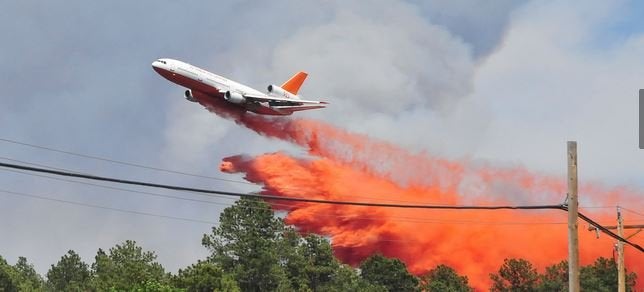
Fire officials in California are imploring amateur UAS operators to steer well clear of wildfire areas after three air tankers had to abort drops on a fire east of Los Angeles. Officials said a fixed-wing UAS with a four-foot wingspan was spotted over the Lake Fire in the San Bernardino mountains and forced a DC-10 tanker and two small aircraft to turn away. The fire is at the 11,000-foot level. Another UAS was spotted later flying 1,200 feet above the ground, three times the height allowed under hobby rules. “These folks who are handling these drones, I have to assume they have no idea what they’re doing,” Chon Bribiescas, a spokesman for the U.S. Forest Service, told reporters Thursday. “They not only endangered the folks on the ground, but they endanger the pilots. It’s infuriating.”
Bribiescas said the fire grew because the drops were missed. It was only partly contained and more than 25,000 acres in size, burning in an area of dry pine trees with homes scattered throughout. There is an FAA NOTAM restricting the airspace to essential aircraft and the Forest Service stapled up handbills throughout the area warning UAS owners to keep their machines grounded. Police are patrolling the mountain roads looking for UAS operators. The DC-10 didn’t waste its load. Firefighters battling a blaze on the Nevada-California border got the unexpected benefit of its 10,400 gallons of red fire retardant. The smaller aircraft had to jettison their loads and the Forest Service says the diversions cost about $15,000.

