
















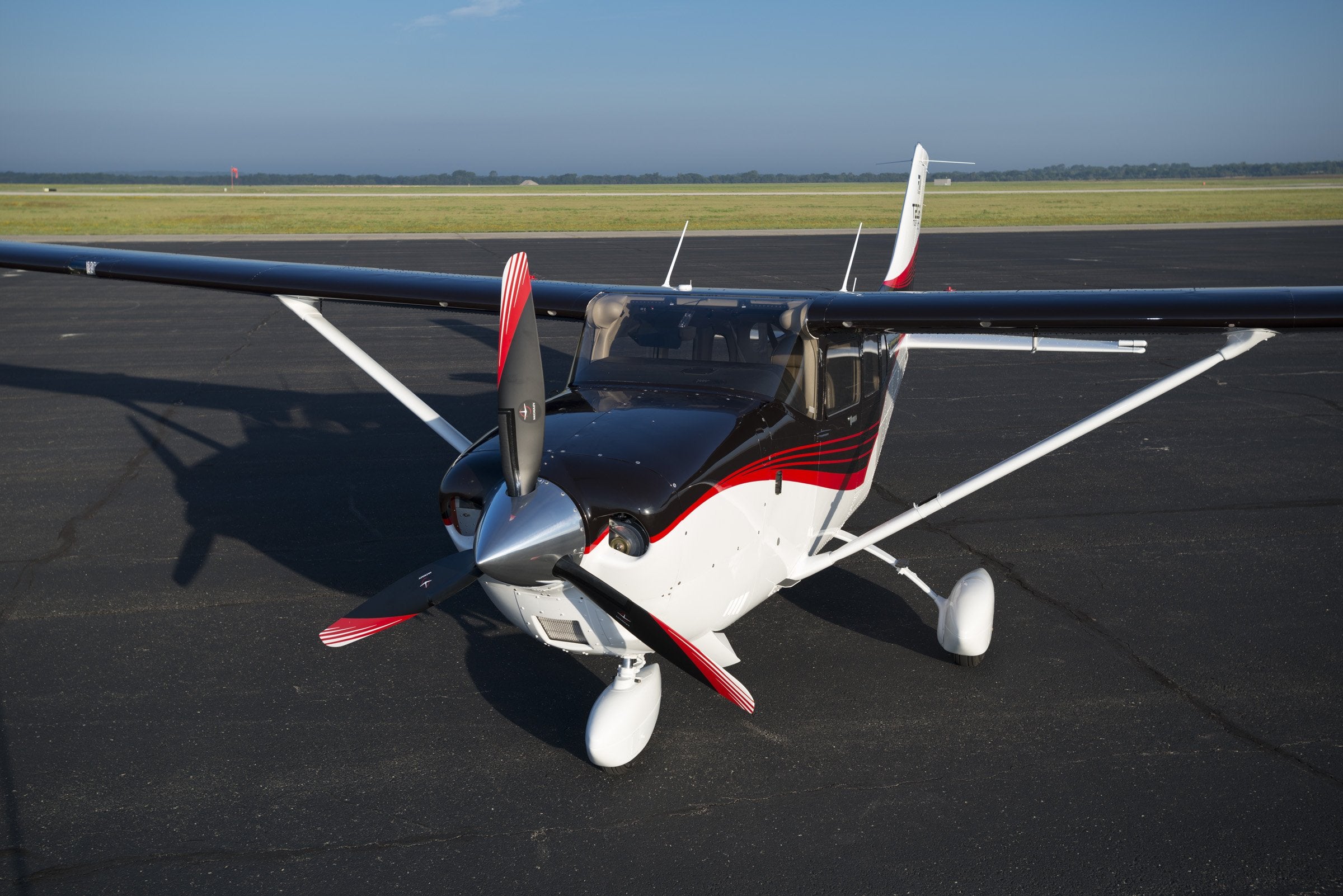
Prompted by reports of engine exhaust leaks from Lycoming TIO-540-AJ1A engines, found most commonly on the Cessna T206 Turbo Stationair, a new urgent Airworthiness Directive requires inspection of the exhaust system within in the next 10 hours time-in-service (TIS) “to prevent engine exhaust leaks, which could lead to uncontrolled engine fire, harmful exhaust gases entering the cabin resulting in crew incapacitation, and damage to the airplane,” says the FAA. Because of the FAA’s determination that the exhaust leaks pose an immediate risk to flight safety, the AD was not subject to the customary notice and comment period, but Lycoming is working to determine the root cause of the leaks, and the FAA says it will consider revising when it has Lycoming’s conclusions in hand.
The FAA estimates one hour of work for each inspection of the exhaust system, the first required within 10 hours TIS and thereafter every 25 or 50 hours TIS depending on the time since the last major exhaust system maintenance (ESM). Engines with more than 1,000 hours since the last ESM are presumed to be less likely to have fast-growing leaks and benefit from the 50-hour window between inspections. According to the FAA, 758 U.S. registered aircraft use the affected Lycoming TIO-540-AJ1A engine.
UPDATE: Lycoming has applied for and received authorization from the FAA for operators to use a compliant carbon monoxide detector to receive the benefit of the 50-hour inspection window (after the initial inspection) regardless of the time since ESM as an Alternative Method of Compliance.

