

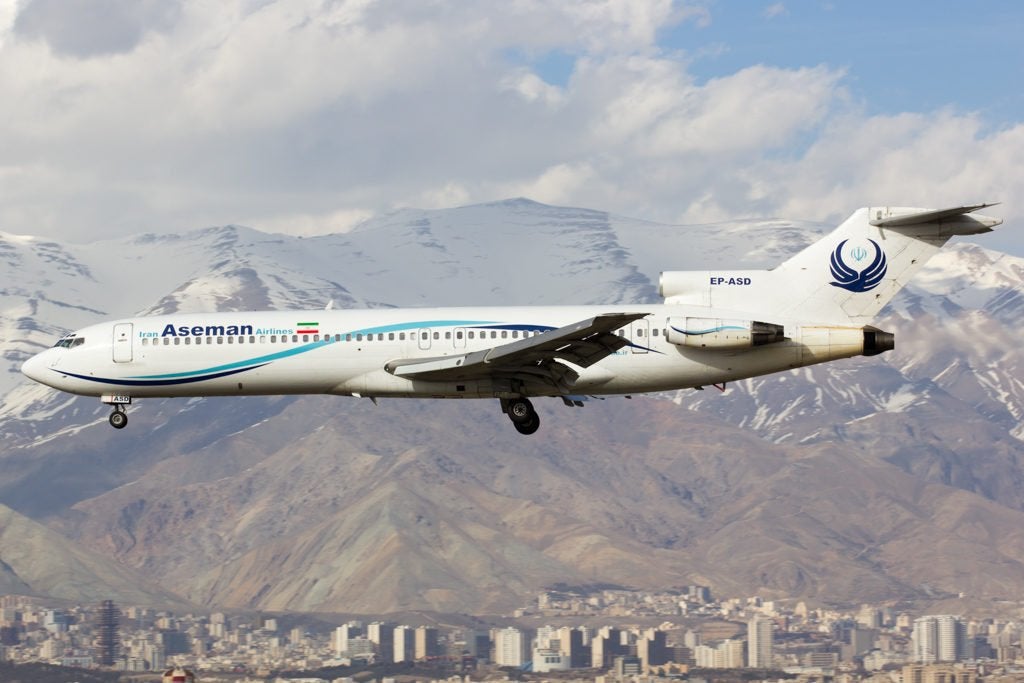
The last scheduled passenger flight of a Boeing 727 was reportedly conducted Jan.12 by Iran Aseman Airlines. The aircraft, a relatively new Boeing 727-200 Advanced (it was built in 1977), flew as EP851 on a domestic flight from Zahedan to Tehran. The low-key final flight marked the end of a remarkable 55-year run for the tri-engine jet that was a state-of-the-art improvement in speed and efficiency when it was introduced in 1962.
Although a few 727s remain in freight and even executive service, most of the 1,831 produced until 1984 were retired by early in this century because they’re noisy and gobble fuel. When the 727 entered service with Eastern Airlines in 1964, it carried as many passengers as four-engine airliners but flew higher and went faster. It became a fixture on domestic routes but was eventually eclipsed by twin-engine short-haul models. Thanks to decades of trade sanctions, Iran hasn’t been able to buy new airliners or spare parts for the legacy airliners it operates.