
















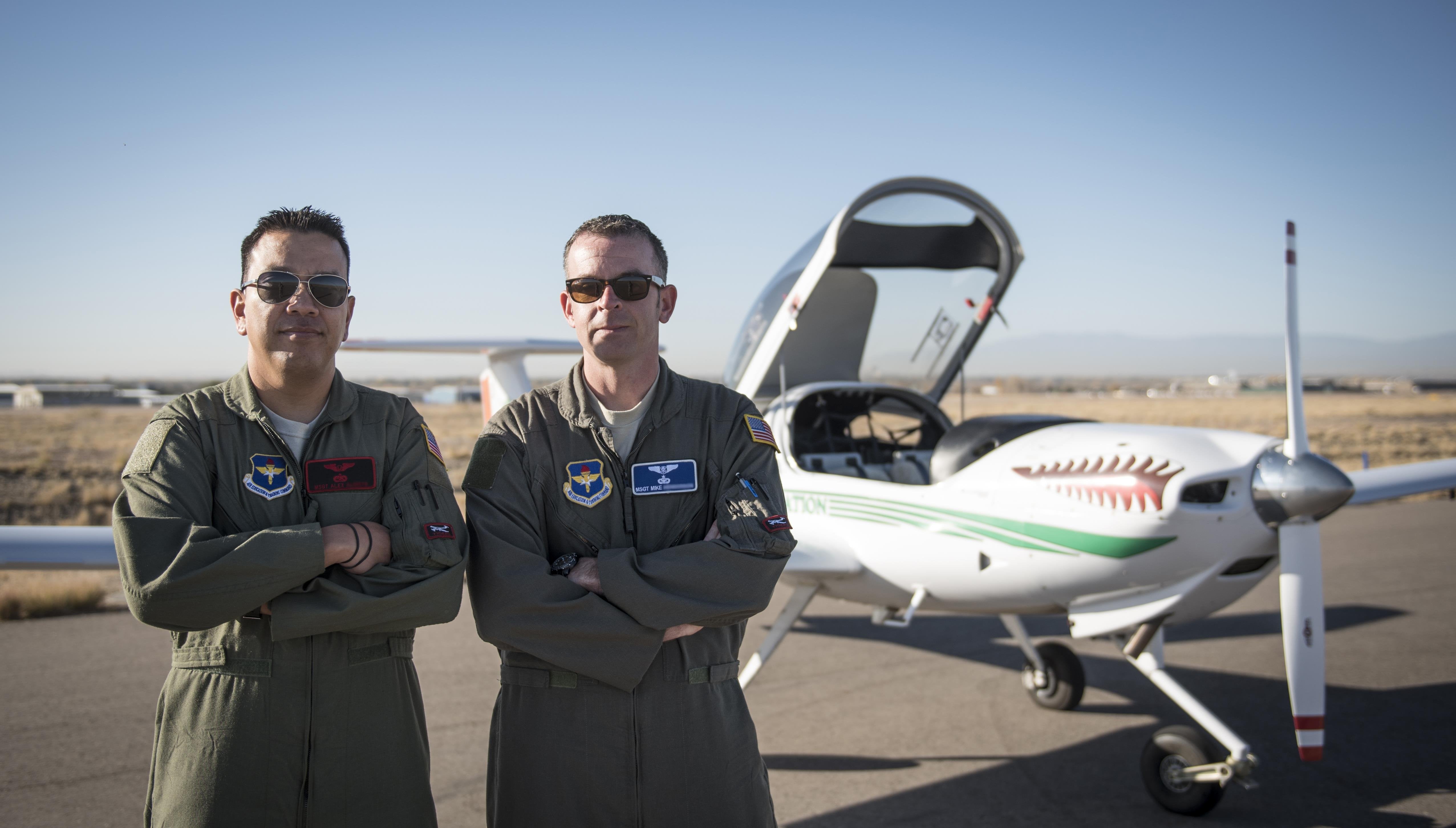
The aviation world was atwitter last week with the news that the U.S. Air Force had selected five recent enlistees to participate in a study on alternative pilot training techniques. The Air Force, however, confirms that they have no plans to put enlisted personnel in the pilot’s seat. “Selecting enlisted members to fill the non-college student role is not intended to develop enlisted aviators. In this selection model, we can pool the data to determine what qualities, habits of mind and patterns of thought equal success in the flying training environment,” says Lt. Col. Robert Vicars, director of the Pilot Training Next (PTN) program. At the completion of the program, the officer participants will join traditional undergraduate pilot training courses and the enlisted participants will attend technical training programs.
The Air Force is battling a critical shortage of pilots, particularly fighter pilots, reporting that they are short 2,000 pilots—1,200 of the in the fighter community. However, Air Force officials report no problem with recruitment of would-be pilots. The shortage is a combination of the rate at which new pilots can be trained coupled with challenges in retaining experienced pilots. PTN is aimed at accelerating that training process. Lt. Col. Vicars said, “This is student-centric learning. We are going to use immersive technology to see how we can help people learn more effectively. This is an initiative to explore whether or not these technologies can help us learn deeper and faster.”
In a press release, the Air Force says, “PTN will lean on a variety of technological platforms to include virtual and augmented reality, advanced biometrics, artificial intelligence and data analytics, all of which can be tailored to the training environment and individual student. That knowledge will be used to refine scientific measuring capabilities and teaching techniques in order to produce the world’s greatest military aviators.”

