
















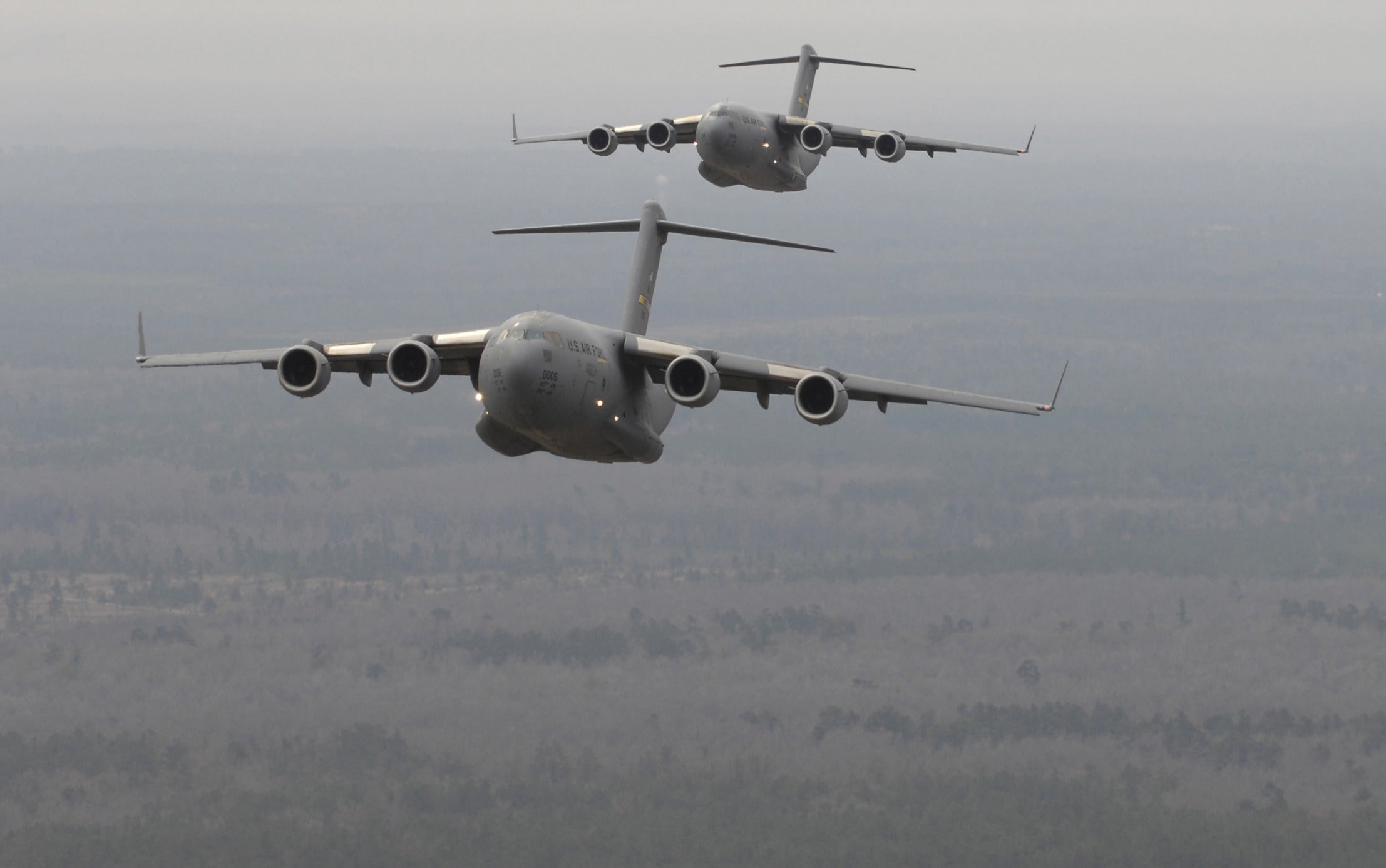
Recent tests using two U.S. Air Force C-17 aircraft showed that flying in formation could potentially save the Air Force up to $10 million per year in fuel costs. The test flights, conducted in July, departed from Edwards AFB in California and flew to Hawaii and back. The trailing aircraft’s autopilot software was tweaked to enable it to maintain the optimum fuel-saving position, about 3,000 to 6,000 feet behind the lead aircraft. “Maintaining position in the [fuel-saving] formation is no more task-saturating for the aircrew than flying at cruise,” said Maj. Kyle Clinton, one of the pilots who flew the trailing C-17. The tests demonstrated in-flight rendezvous, day and night operations, and several hours of flight on autopilot, the Air Force officials said.
Donald Erbschloe, chief scientist for the U.S. Air Force Air Mobility Command, said the drafting concept has been tested before, but those tests involved fighter aircraft. Those airplanes had to fly closely at “fingertip” intervals for any benefit, requiring a lot of pilot effort for what Erbschloe described as “white-knuckle” flying. Erbschloe said in addition to confirming the fuel savings, assessing how the formation flying affected the aircrew was an important part of these latest tests. Research will continue next year with a two- to three-year project to test the fuel-saving practice with other aircraft and develop Air Force procedures for its implementation.

