
















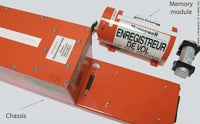
Wednesday, a remote-controlled submarine was used some 600 miles off the coast of Brazil, nearly 13,000 feet down in the Atlantic, to spot the chassis of Air France Flight 447’s flight data recorder, with the data module missing — that module was found, Sunday. The finding has led to hopes that investigators may be able to recover key new data regarding the June 1, 2009 crash that killed all 228 aboard. The recorders onboard the Airbus A330 in this case were manufactured by Honeywell International and store hundreds of parameters, and the company says they were designed to withstand 1,500 G’s and depths of 20,000 feet — for 30 days. BEA (Bureau of Enquiry and Analysis for Civil Aviation Safety) officials had previously said that if the cylindrical data module could be found, there is still a good chance it will contain retrievable data.
The recorder chassis was discovered during the first 12-hour dive of a submersible called the Remora, three weeks after searchers found the aft section of the aircraft. BEA officials are directing the operation to focus on recovery of the aircraft’s flight recorders first, with recovery of bodies, second. The chassis itself was found separate from other debris, upside down and partially buried. Other debris was nearby. Data already collected from automated transmissions sent by the jet in its final moments suggest that the jet’s airspeed sensors were transmitting faulty data as the aircraft flew at high altitude in bad weather.

