
















Boeing Phantom Works has begun construction of a liquid-hydrogen powered high altitude long endurance (HALE) unmanned aerial vehicle designed to fly for more than four days at altitudes up to 65,000 feet, while carrying a 450-pound payload. Key to Phantom Eye is its propulsion system, which after five years of development saw completion of an 80-hour test in an altitude chamber on March 1 (and about which Boeing offered few details). The twin-engine Phantom Eye demonstrator aircraft will have a 150-foot wingspan. Successful testing could make it the precursor of a larger HALE that would carry 2,000 pounds for more than 10 days. A third design, the Phantom Ray, is also expected to evolve from the program and may be the first to fly. The Ray will be a fighter-sized UAV designed as a flying test bed for advanced technologies. Phantom Eye is the evolution of Boeing’s earlier piston-powered Condor, an aircraft that set records for altitude and endurance in the late 1980s. Boeing expects first flight of the Phantom Eye UAV to take place early next year.
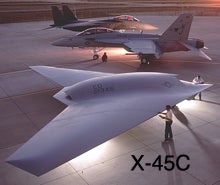
Boeing sees the Phantom program’s rapid prototyping as a key to rapidly developing UAV markets. Boeing says the Phantom demonstrators reduce technology risks, and set the stage for meeting the future needs of both commercial and military customers. Phantom Eye’s mission profiles could include intelligence, reconnaissance, surveillance and communication, according to the company. Boeing is acting as the aircraft system designer and is working closely with Ball Aerospace, Aurora Flight Sciences, Ford Motor Co. and MAHLE Powertrain to develop a demonstrator. The smaller Phantom Ray, which evolved from the X-45C program, is scheduled for first flight in December.

