
















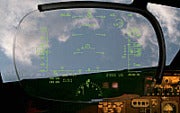
If pilots had head-up displays in the cockpit, hundreds of accidents over the last 13 years could have been prevented or at least mitigated, according to a study released on Monday. The Flight Safety Foundation analyzed 983 accidents between 1995 and 2007 involving large multi-engine aircraft (12,500 pounds and up). The study (PDF) found that overall the technology could have affected the outcome in about one-third of the accidents. About 69 percent of takeoff and landing accidents likely could have been prevented, the study found. The technology eliminates the need for the pilot to repeatedly transition between the instruments and the forward view, enhancing overall situational awareness. “Head-up guidance systems technology is a great safety tool for the prevention of runway excursions, loss of control, and approach and landing accidents,” said Bob Vandel, one of the authors of the study. “This technology provides extremely useful data to the flight deck crew.”
The study was funded by Rockwell Collins, which is a leading supplier of the head-up technology. However, the Wall Street Journal said the Flight Safety Foundation is well-respected in the industry and its conclusions aren’t likely to be challenged. The Foundation, an independent nonprofit based in Alexandria, Va., was founded in 1947. The Journal also noted that a recent study by American Airlines found that pilots using head-up displays in Boeing 737s tend to land farther down the runway than recommended. That study is ongoing and the airline has not drawn any conclusions from that data. The most important information provided by the display is flight path and speed information, the Foundation said.

