
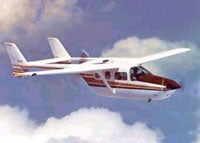
Cessna Aircraft Company this week confirmed to AVweb it is developing a supplemental inspection document (SID) focused on the wing attachment points of its long out-of-production model 336/337 centerline-thrust piston twins. According to company spokeperson Doug Oliver, the forthcoming SID may be released as early as the third quarter of 2010 and will call for “relatively involved” inspection procedures despite there being no related accident or incident. Although a SID is not mandatory for non-commercial small piston-powered aircraft registered in the U.S., operators in other countries may be required to perform the inspection by their regulatory authorities. Cessna, for its part, would consider the inspection called for under the SID mandatory, according to Oliver. AVweb first reported Cessna was developing the SID late last month.
“We continually look at aircraft still flying in a light driving us toward safe operations,” Oliver told AVweb. The company’s ongoing effort to develop the new inspection procedure is part of that effort, he said. Although the company is not prepared to state what it has found as part of its continuous airworthiness program for the 336/337 fleet, speculation is additional stress is placed on the wing structure by the types’ twin-boom tail configuration. “Using advanced systems and techniques, Cessna has become proficient in fatigue analysis, so when we started looking at our various fleet models, we knew the twin-boom design of the 336/337 had higher loading than a single-fuselage design and it is one of the early aircraft addressed,” Oliver told AVweb via e-mail.