
















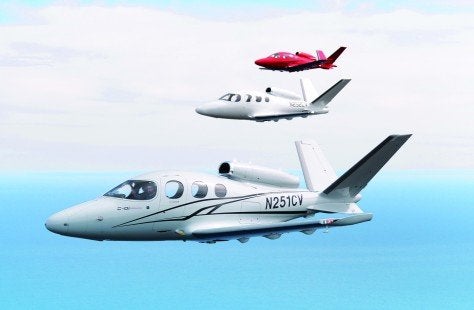
The last project standing in what was once a crowded field of proposed single-engine personal jets hit a milestone Tuesday that could lead to certification by the end of the year. The FAA granted type inspection authorization (TIA) to Cirrus’s Vision SF50 single-engine jet. TIA is the approval for FAA inspectors to start flying the conforming prototypes to validate the test flight data gathered by Cirrus pilots. Assuming the numbers are repeated, type certification will follow. Before the TIA was issued, the FAA analyzed the paperwork and did a physical inspection of one of the prototypes. “The accumulated test hours and results deemed it safe to fly by the FAA and ready for compliance validation, a clear indicator of substantial progress along the Vision SF50’s multi-year march toward first customer delivery,” Cirrus said in a news release. Cirrus began production of the jet in April and now has three customer aircraft under construction.
While having FAA inspectors in the air is a big deal for the project, there’s another test coming up that is sure to attract a lot of attention. The SF50 will have the largest whole-plane parachute ever installed and the first airborne deployment is scheduled for sometime this fall. The chute itself has already been tested using weights. Because of the aircraft’s mid-ship engine design, the parachute is in the aircraft’s nose. After a rocket pulls the parachute pack from the nose compartment, about three feet ahead of the cockpit, straps concealed by break-away moldings along the top and flanks of airframe pull free and the suspend the aircraft below the two-stage canopy. AVweb had a look at the Cirrus jet production facilities in April and prepared this video.

