
















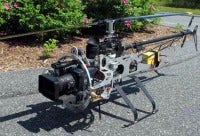
The new FAA reauthorization bill that was signed into law this week by President Obama (PDF) creates a fast track for the integration of civil unmanned aircraft systems into the national airspace. The legislation states that the FAA and the UAS industry must work together to develop a “comprehensive plan” by mid-November that will safely achieve the full integration of UAS by Sept. 30, 2015. Deadlines for certain smaller systems are set even sooner. For example, first responders will be allowed to fly small UAS weighing 4.4 pounds or less within 90 days. And within six months, the FAA must designate six test ranges where the UAS can fly to develop their sense-and-avoid capabilities.
Within one year, small UAS under 55 pounds will be allowed to fly in the Arctic regions of the U.S., 24 hours a day, at an altitude of at least 2,000 feet. By mid-2014, small UAS that weigh under 55 pounds will be allowed to fly in the national airspace system. “Technology is advancing to the point where we now know these systems can reliably fly,” said Michael Toscano, president of the Association for Unmanned Vehicle Systems International. “The next step is to work on the regulations that govern the rules of the sky to ensure that unmanned aircraft do no harm to other manned aircraft or to people or property on the ground.” The legislation says that all UAS must have a “sense and avoid capability,” and standards will be set for the licensing of operators. The FAA also will be required to study the causes of accidents involving UAS.

