
















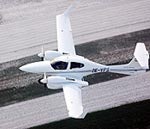
In Austria, a Diamond Aircraft DA42 twin has been flown with digital fly-by-wire systems to demonstrate active electronic control that the company hopes will one day be widely applied in light aircraft, changing how people fly. In the test aircraft, most functions are manipulated by the digital system, including both the flight and engine controls. The system can control basic flight safety by limiting flight parameters like pitch, bank and airspeed, but can also react to environmental disturbances like turbulence. Researchers and Diamond hope it will evolve to eventually provide automated takeoff and landing, and Diamond imagines similar systems could ultimately reduce the skill level required by the pilot, making flying more accessible to more people.
Researchers located in several countries have contributed to the project, which has scaled down the system’s weight size and expense for application in light aircraft. The system’s hardware and software have been designed with redundancy and to recognize internal component failures. When failures are detected, the system automatically reroutes commands through different electronic paths to different actuators, bypassing critical failures. The hardware and software were developed in Germany. The system was tested in simulation in the Netherlands. And flight tests were performed with a final prototype in Austria. The project is designed to develop maximum levels of onboard automation. Project researchers hope their work will significantly reduce the accident rate of small airplanes by creating an onboard system that will permanently and constantly assist pilots in the control of small aircraft.

