
















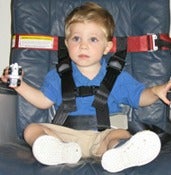
Pilots of general aviation aircraft should be careful about allowing passengers to share a seat and a seat belt, the FAA says in a clarification to its seat-belt requirements, released last week. “Prior [FAA] interpretations state that the shared use of a single restraint may be permissible,” the FAA said. But the new clarification says it is permissible only if it conforms to the limits defined in the Airplane Flight Manual. The pilot also must check that the seat belt is approved and rated for such use, if that information is available. Pilots should also attempt to affirm that the structural strength limitations of the seat are not exceeded. Even better, says the FAA, “Whenever possible, each person onboard an aircraft should voluntarily be seated in a separate seat and be restrained by a separate seat belt.”
The FAA revisited its seat-belt advice after an accident in March 2009, when a 10-seat Pilatus PC-12 crashed and all 14 people on board were killed, seven of them children. In its report (PDF), the NTSB noted that if the accident had been less severe and the impact had been survivable, any unrestrained occupant, or occupants sharing a single restraint system, would have been at much greater risk of injury or death. In August 2010, during its investigation, the NTSB recommended that the FAA should require separate seats and restraints for every occupant in Part 91 operations. Also, the board said, the FAA should require each child under 2 years old to be restrained in a separate seat position by an appropriate child-restraint system during takeoff, landing, and turbulence.

