












image: Saab
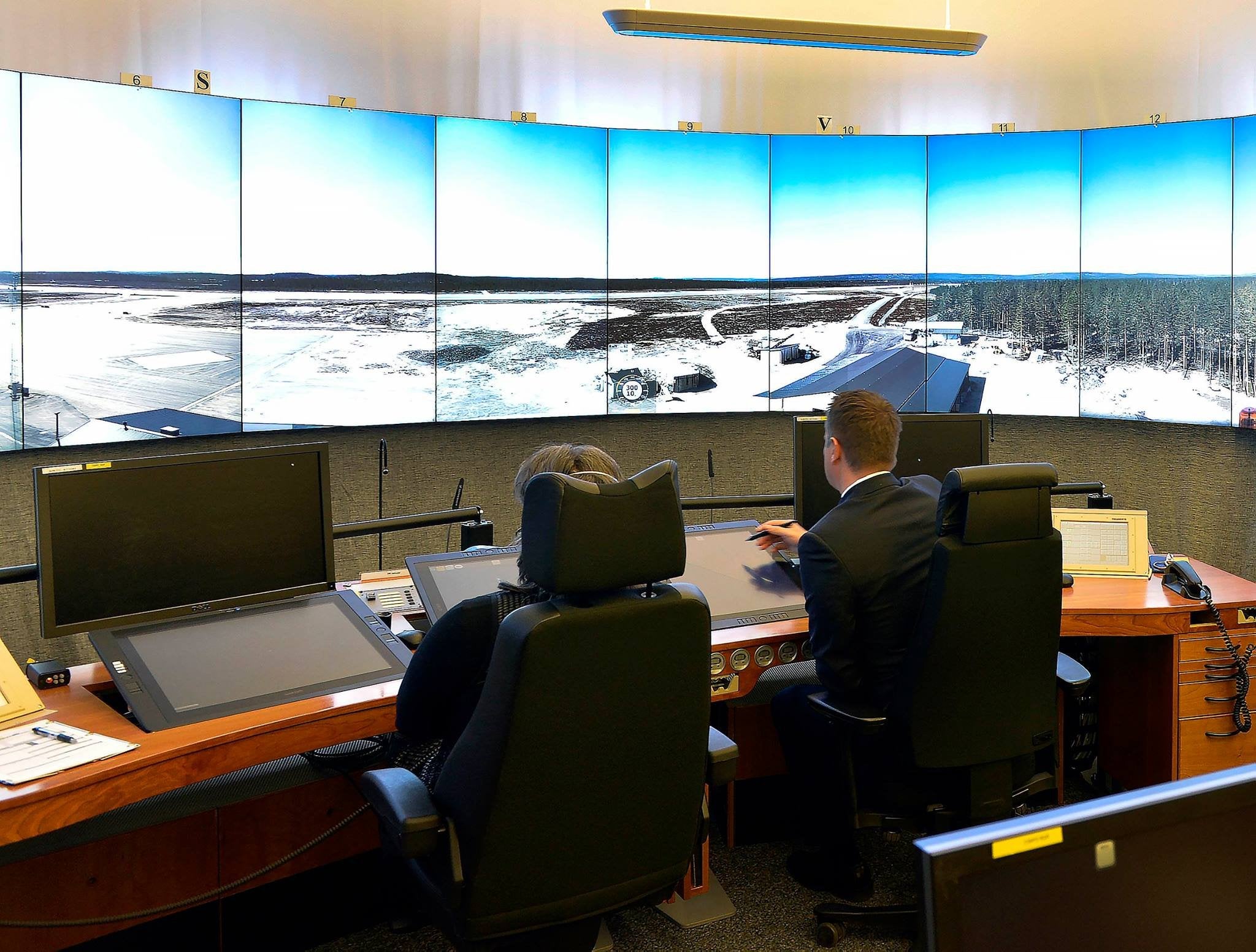
Fort Collins-Loveland Municipal Airport has been named as the first test facility for the FAA’s new Virtual Air Traffic Control Tower technology, the agency announced last week. Currently, the field is non-towered. The new system, which will be up and running by next summer, is expected to help attract commercial operators to the airport. “The high-tech array will provide an enhanced level of air safety at a cost dramatically lower than the expense required for construction and staffing of traditional towers,” according to the Colorado Division of Aeronautics. A remotely operated control tower operated by Saab has been in test mode in Leesburg, Virginia, for several months, but the Loveland facility will be the first test of the FAA’s own system. Saab’s system has been fully operational since April at Ornskoldsvik Airport in Sweden.
Remote towers make it possible to pool together controllers from lightly used airports into a central facility, and to extend services to airports that don’t have towers. Also, large sprawling airports like O’Hare that now have multiple towers could consolidate in one facility. An array of cameras and sensors sends data to the controllers, and features such as object tracking, night vision and image enhancement help to enhance controllers’ situational awareness, even in low-visibility conditions, according to Saab. The system planned for Loveland will gather position and flight data from aircraft both in flight and on the ground, fixing their exact positions. It also will monitor movement of vehicles and other objects on the ground, including animals, near airport runways, and send that information to FAA controllers at the central location.