
















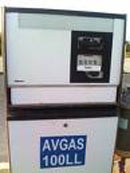
Although it hasn’t released the final report to the public, the FAA’s unleaded avgas transition rulemaking committee (UAT-ARC), will recommend a fuel approvals process stretching out as long as 11 years and will be asking Congress for at least $60 million to fund the project, plus as much as $13 million from the industry. The report is now being reviewed by the Department of Transportation and sources told AVweb that it could be released “within a few weeks.” Because the FAA insisted on keeping a tight lid on the process, none of the sources AVweb spoke to regarding the report agreed to be quoted. However, those we did speak to expressed satisfaction that the ARC’s recommendations, if adopted in some form, will ignite meaningful progress in finding a replacement fuel for leaded avgas. “The snowball is starting to turn down the hill. There’s some momentum here that’s never been there before and I think it’s a big positive,” said Lycoming general manager Michael Kraft in this podcast recorded at Aero in Friedrichshafen. “What it does is to give anyone coming to market with a fuel a risk management plan. Nobody’s willing to make the investment if they can’t see the return,” he added.
Although the ARC’s foreseeable timeline is 11 years, that doesn’t necessarily mean it will take that long to field approved fuels, but only that this might be the maximum window for any realistic fuel candidates to come forth. In parallel with the ARC’s work, ASTM International is developing two so-called “gated” standards for unleaded aviation fuel-one hydrocarbon based, one non-hydrocarbon based-which will serve as starting posts for any companies wishing to submit candidate fuels. The initial part of the approvals process will involve setting up testing and certification protocols for applicants to follow. The FAA’s Thomas Hughes Center in Atlantic City would oversee this work, presumably using the requested funding.
Each fuel will have to achieve 16 avgas readiness levels, a dozen involving the fuel itself and four more related to distribution and storage. One source told us the ARLs are a kind of checklist to assure that all of the critical specs-claimed octane, material compatibility, miscibility, and so forth-are met. This spec conformance would be overseen by a yet-to-established committee called the Piston Aviation Fuel Initiative composed of a joint industry and FAA board which would be headed by a director and supported by an administrative staff.
The sources we spoke to told us the FAA’s $60 million funding request is a worst-case number, envisioning up to 10 candidate fuels. “I don’t think there will be that many. Right now, there are only two, Swift and GAMI,” one source said. However, we know of research on at least one more potential candidate being conducted Aircraft Specialties Lubricants. This fuel hasn’t been submitted for approval yet. Nor have the oil companies shown their cards. We were also told that despite the long time line, approved fuels may emerge much sooner than 11 years. In fact, fuels like Swift’s 100SF and GAMI’s G100UL, which have been testing extensively for some time, may enter the approvals process with many of the 16 ARL boxes ready to be checked.
If that’s true, Swift’s or GAMI’s fuel could conceivably be competing with 100LL well before any environmental pressure forces leaded fuel from the market, if it ever does. “It highly likely that you may see multiple fuels achieving the the same unleade standard,” Kraft said. “The important thing is that it’s going to be transparent to the end user.”

