
















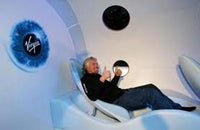
The FAA has partnered with eight universities to figure out how space tourism fits into the airspace and, in some ways, into society itself. New Mexico State University at Las Cruces will lead the Center of Excellence for Commercial Space Transportation. There are, of course, mundane practical matters to be addressed. “If the plans of people like Sir Richard Branson of Virgin Galactic are accurate, in the next three to five years there will be very frequent space tourism launches,” Scott Hubbard, a professor of astronautics and aeronautics at Stanford University, told The Associated Press. “That means you’ve got to clear the airspace and if it’s very frequent you’ve got to be sure to manage that together with airplanes going by,” he said. But the advent of regular launches to the edge of space or beyond raises technical, regulatory and even medical issues that haven’t been considered before and the FAA’s Hank Price says the agency wants to try and keep everyone safe without unduly impeding development of the industry. “We try to be as flexible as we can, to be as safe as possible but also allow testing of (private spaceships and rockets),” Price said.
Price said there are a host of areas that need to be fleshed out, from certification of private astronauts to design and operational standards for spaceports. Beyond those challenges, other scientists are looking at how to make commercial space travel accessible to as many of those who want to try it as possible. The current rules, essentially there for the safety of test crews, have fairly stringent medical and training requirements. That would shut out a large portion of the population, including those with chronic illnesses, and James Vanderploeg, a professor of aerospace medicine at the University of Texas Medical Branch at Galveston, is looking at whether they, too, could be accommodated. “How do you evaluate those individuals, what kind of medical monitoring might be required, what sort of conditions would be acceptable to fly?”

