
















Photo: NTSB
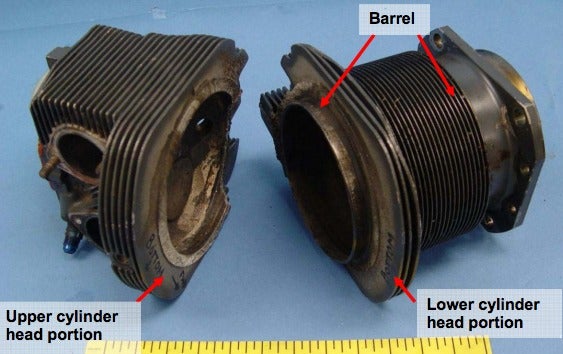
Up to 6,000 Continental engines with aftermarket PMA cylinders from Engine Components Internationalcould be affected by a new Airworthiness Directive proposed by the FAA on Monday. The FAA wants to require initial and repetitive inspections, with the replacement of any cracked cylinders. The entire cylinder assemblies would have to be replaced at reduced times-in-service, at a cost of about $1,700. The schedule for inspections and replacement varies depending on the serial number of the parts. The total cost of compliance for the fleet would be about $82.6 million, the FAA said. In a news release issued Monday morning, ECi responded that the FAA’s proposal is “unwarranted, inappropriate, and unnecessarily punitive for the owners of the affected aircraft.”
ECi says the failure rate of its Titan cylinders is the lowest in the industry, and the failures noted in the FAA analysis were caused by excessive cylinder head temperatures in the engine, due to either “improper leaning and powerplant management by the pilot… [or] by abnormal combustion events such as heavy detonation and pre-ignition that can cause thermal runaway and rapidly increase CHT to temperatures of 650F or more.” No cylinder assembly from any manufacturer “can survive such temperatures for more than a few minutes,” ECi said. ECi also said compliance with the AD would likely cause more problems by subjecting so many aircraft to premature major overhauls, which can carry the risk of damaging the engine. The NTSB said after an analysis last year that the FAA should do more to address ECi cylinder-head failures. The FAA is accepting comments on the proposal until October 11.

