
















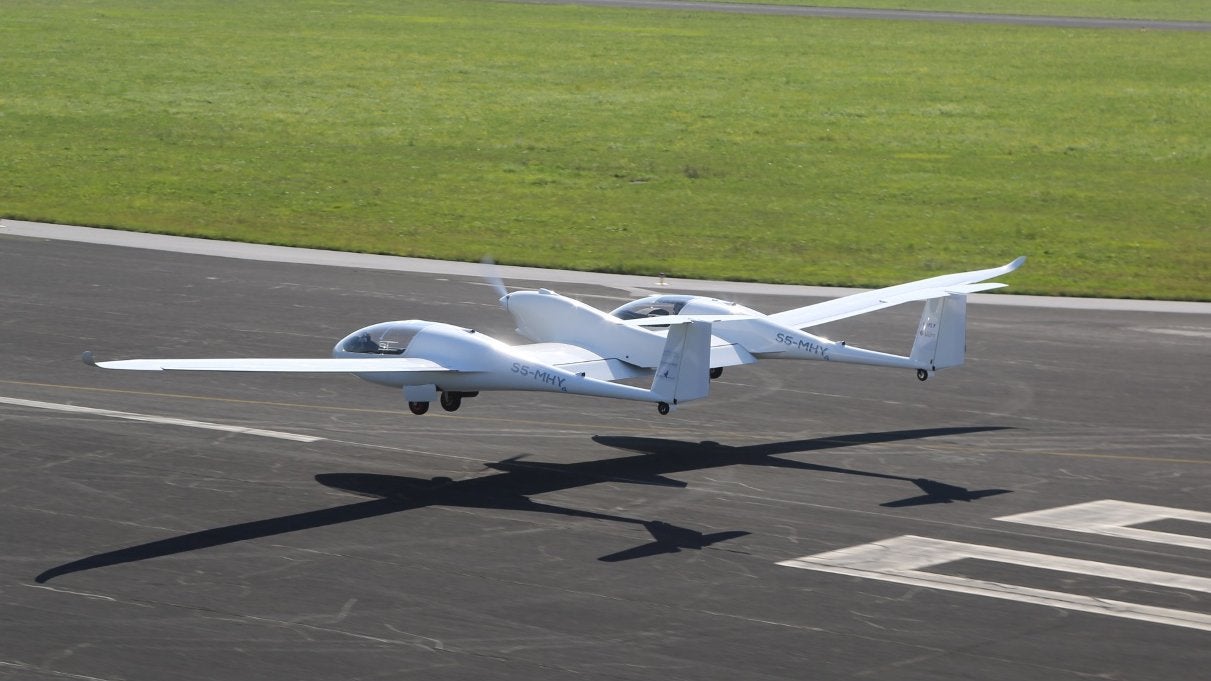
A four-seat airplane powered by hydrogen fuel cells completed a first test flight this week in Germany, reaching milestones in both size and emissions-free technology. Researchers at the German aerospace center, the DLR, have been developing the HY4 model with a mission to prove that hydrogen can be a viable aviation fuel. The flight from Stuttgart Airport lasted for 10 minutes, with two pilots and two dummies on board, according to an Associated Press report. The 80-kilowatt motor allows for flight at a maximum speed of about 200 kilometers per hour and a range of up to 1500 kilometers, according to the HY4 website.
Slovenian aircraft maker Pipistrel, hydrogen systems company Hydrogenics and other researchers have partnered to develop the airplane, which features a hydrogen fuel cell, battery and electric motor. The battery powers takeoffs and climb, while the hydrogen cells provide efficient in-flight power. “With the HY4, we now have an optimal platform to continue developing the use of fuel cells on aircraft. Small passenger aircraft, such as the HY4, could soon be used in regional transport as electric air taxis and offer a flexible and rapid alternative to existing means of transport,” the DLR said in a statement.

