
















|
Don’t see a video screen?
Try disabling ad blockers and refreshing this page. If that doesn’t work, click here to watch on YouTube. |
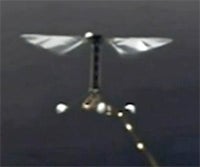
Harvard University researchers have demonstrated a fly-sized UAV that actually mimics insect flight. The researchers spent 12 years developing the robo-fly, which uses piezoelectric devices that contract and release when power is switched on and off, allowing it to beat its tiny wings. “We get it to contract and relax, like biological muscle,” Dr. Kevin Ma, one of the scientists, said in a news release. The researchers released a video of the device in a controlled hover and envision it being used for search and rescue, where it could fly through the tiny spaces of a debris pile to locate survivors. It might even take on jobs normally done by insects, like pollination of crops.
To reach that point, however, there are some daunting technological challenges. The little robot doesn’t yet fly with an autonomous power supply. It’s tethered. Also, a raindrop or stiff wind can do it in.

