
















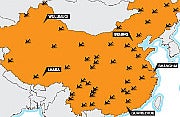
The Chinese government has announced plans to invest more than $228 billion to improve its aviation industry over the next five years, according to the head of China’s Civil Aviation Administration (CAAC). The improvements translate to the addition of about 45 airports and almost 2,000 aircraft, CAAC’s Li Jiaxiang said. China began localized tests to expand general aviation’s access to airspace in January. This week, it apparently acquired Cirrus, after signing a deal for Groen Brothers last month and Teledyne Continental Motors last year. Of course, the country already builds Cessna Skycatchers and in 2009 it announced plans to build its own commercial airliners. The latest investment is aligned with the country’s current predictions regarding increases in its air traffic and a goal to annually move well more than 1 billion passengers by air two decades from now.
China moved 267 million passengers by air in 2010, which is reportedly up more than 15 percent, year over year. The country expects its aircraft to move 450 to 500 million passengers by air in 2015. By 2030, the country is aiming for 1.5 billion. Airbus, Boeing, Bombardier and Embraer, along with general aviation manufacturers, have been actively marketing their wares and China has, for the most part, been interested. With China seeking to build their own airliner somewhere in the future and its continued acquisition of general aviation suppliers and manufacturers, the field is changing. Foreign manufacturers are aware that their place in the Chinese market is changing, too.

