
















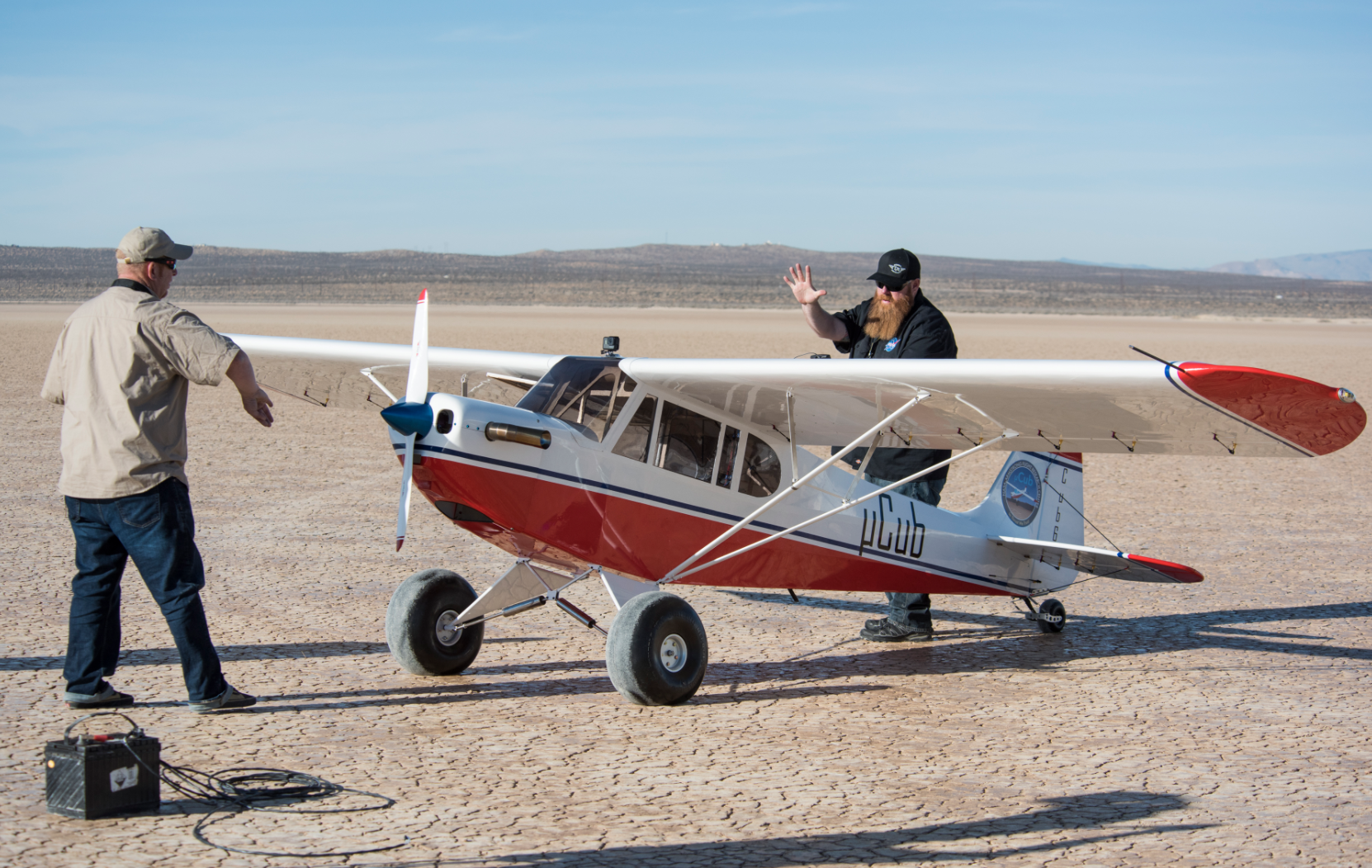
With so many companies working on electric-powered VTOLs and other airplanes of the future, it may seem odd that NASA is experimenting with what is essentially a big RC model of a Cub. The airplane, about 60 percent the size of a piloted aircraft, couldn’t look much more traditional, with its tailwheel, a big wide wing and a single prop on the nose. Yet the recent tests conducted at NASA’s Armstrong Flight Research Center in California are “leading a critical phase for UAS integration into the National Airspace System, by educating engineers and validating key technologies that will directly apply to the next generation of large-scale unmanned vehicles,” NASA said.
The MicroCub is a Bill Hempel Super Cub design, NASA said, with a 21-foot wingspan, modified by engineers at Armstrong to support their research. On Jan. 18, the MicroCub flew for the first time. NASA said this initial flight was intended to check the ground handling and flight characteristics of the aircraft, and also to validate the command-and-control system, verify the “remote control only” mechanism, set the tuning for autopilot gain, perform engine runs, gauge fuel consumption and test stall speed. The aircraft is equipped with a Piccolo Autopilot guidance system and a JetCat SPT-15 Turboprop engine. After the initial January flight, the aircraft was also equipped with an onboard smoke system, which will be used as “a see-and-avoid tool,” NASA said.

