
















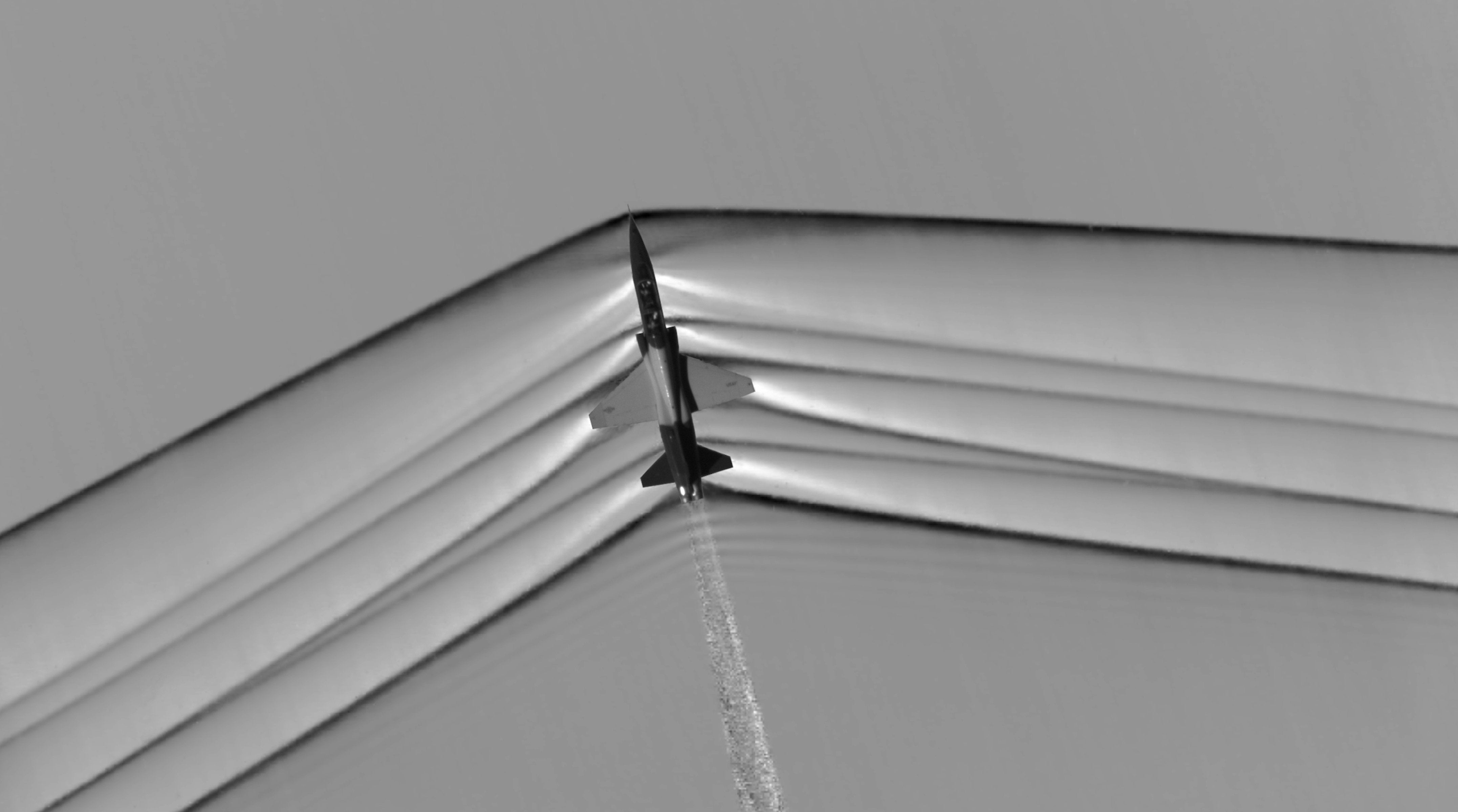
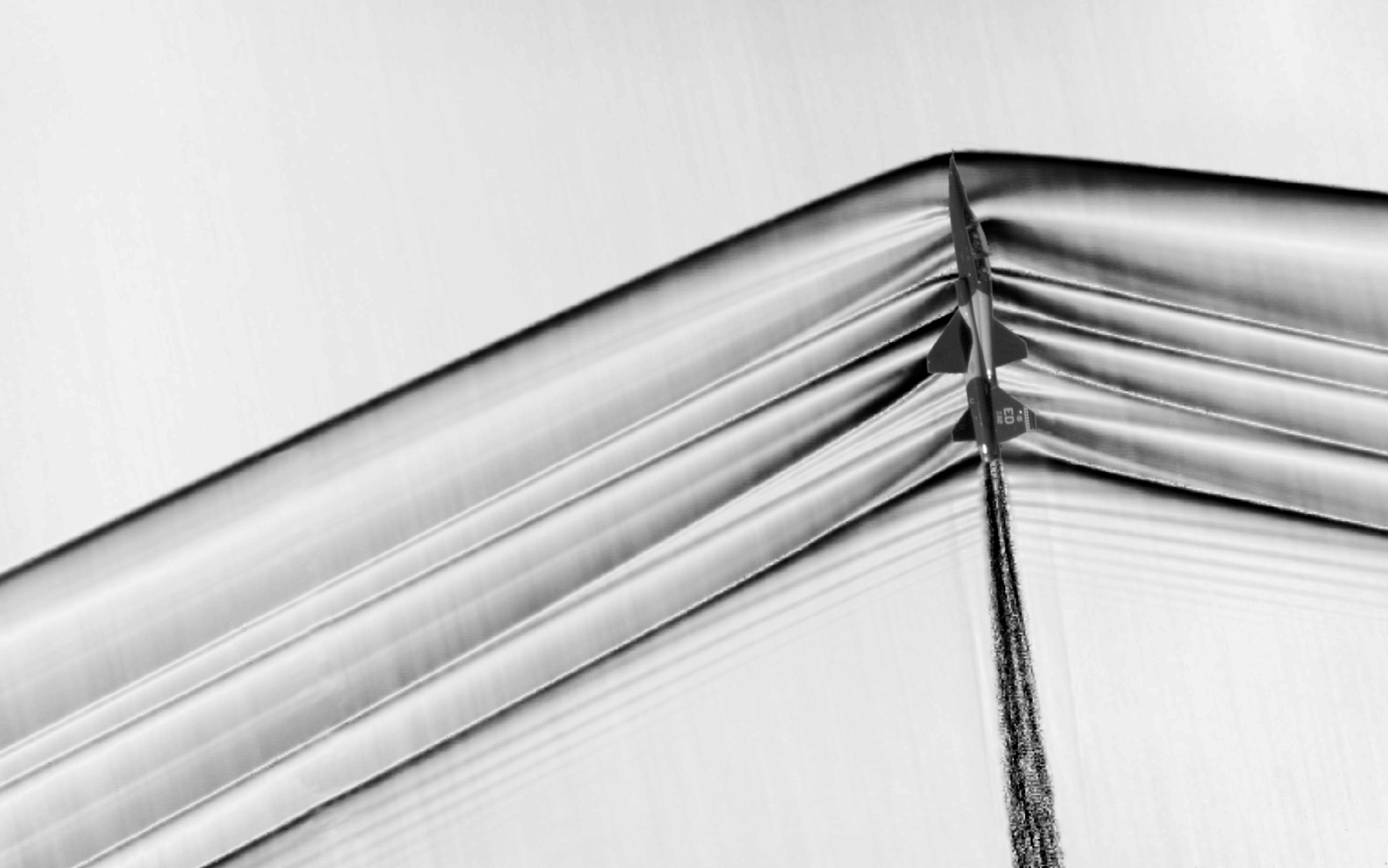
Researchers from NASA have been experimenting with a 150-year-old photography technique that captures dramatic images of the shock waves created when airplanes fly at supersonic speeds. The images, which NASA posted online last week, reveal the effect of supersonic flight on the air-density gradient. Simple equipment is used to capture the images, which then are subjected to advanced processing techniques developed by NASA to create the final result. The images will be used to validate or improve current designs and techniques, said Brett Pauer, manager for the project at NASA’s Armstrong Flight Research Center, in California. The goal, he said, is to help create future prototype low-boom aircraft.
images: NASA
The technique, known as schlieren imagery (for the German word for “streaks”), was developed in 1864 by German physicist August Toepler. He used the method to reveal images of very weak sound waves at the threshold of hearing. Schlieren imagery was later used by Ernst Mach and his team in their studies of shock waves. In these images, researchers digitally removed the desert background, then combined and averaged multiple frames to produce a clear picture of the shock waves. The airplane is aT-38C from the Air Force Test Pilot School.

