
















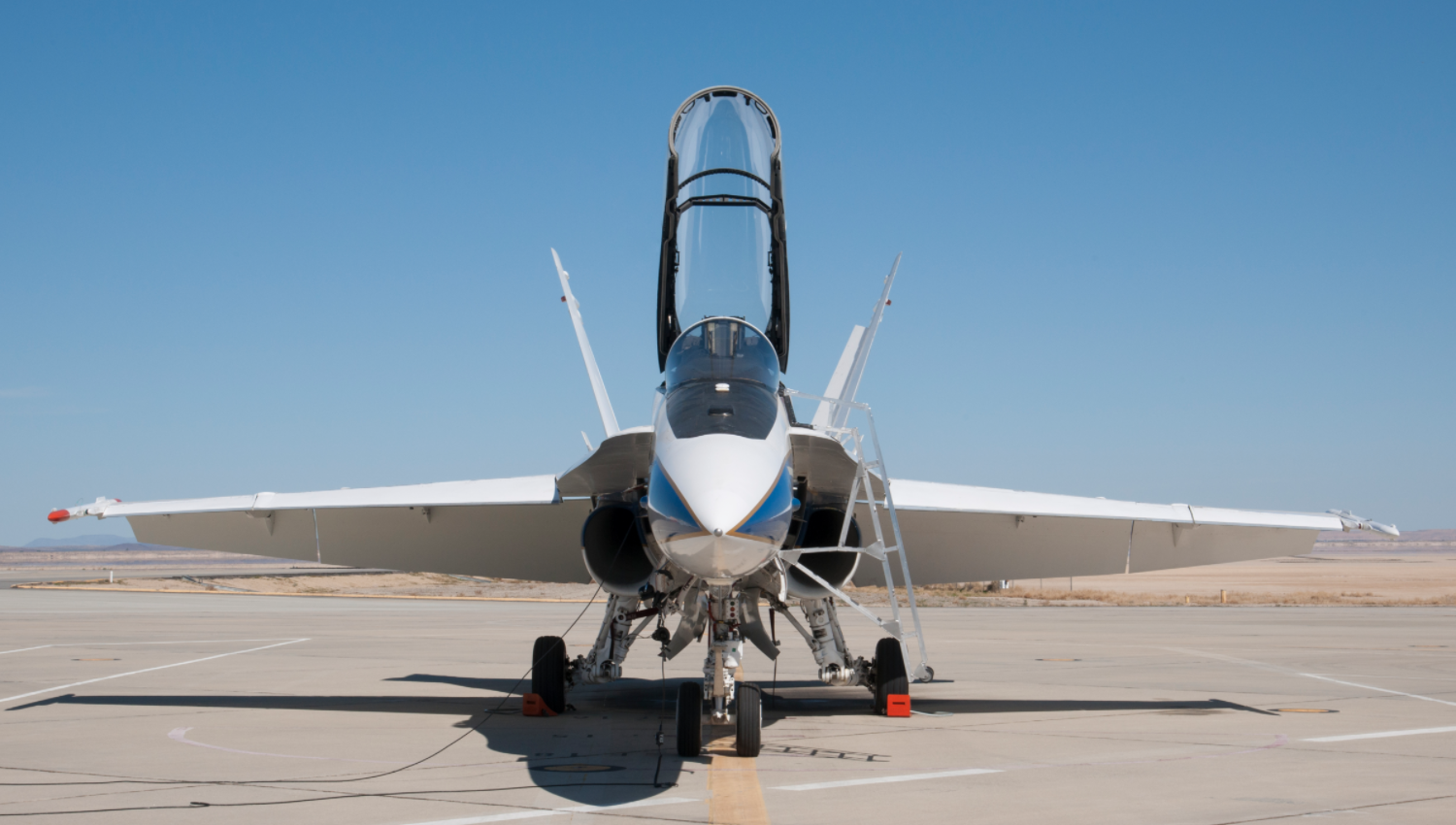
NASA F-18
NASA plans to fly an F-18 at supersonic speeds above Florida’s coastal waters later this month, producing sonic booms for a test program. The aircraft will fly at or above 32,000 feet when it goes supersonic. The flightpath is designed to keep the strongest-sounding sonic booms away from residential areas, while still producing booms above Kennedy Space Center, where the sound will be collected by 32 microphones on the ground. The booms will be loudest on the beaches north of KSC, and Cape Canaveral Air Force Station will hear quieter booms. Residents will hear a sound resembling “the rumble of distant thunder,” said NASA, in areas including Port Canaveral, Cocoa Beach, Port St. John, Titusville, Mims and Scottsmoor. People in those areas may hear an occasional “muted” sonic boom, NASA said.
The F-18, which is based at the NASA Armstrong Flight Research Center at Edwards Air Force Base, in California, will take off from Kennedy’s Shuttle Landing Facility and fly off the coast of Cape Canaveral. The F-18 will fly a designated flight path where it will exceed Mach 1, the speed of sound, and produce a sonic boom. Meanwhile, NASA also will fly a TG-14 motorized glider equipped with a wingtip microphone, at an altitude between 4,000 to 10,000 feet. At the test point, the TG-14 will temporarily shut down its motor and glide. This will enable the wingtip microphone to pick up a clean, accurate sonic-boom signature before it travels through any turbulence. NASA said it expects to fly the F-18 two to three times per day, starting Monday, Aug. 21, and continuing until the end of the month or early September. The research plan calls for at least 33 sonic booms.

