













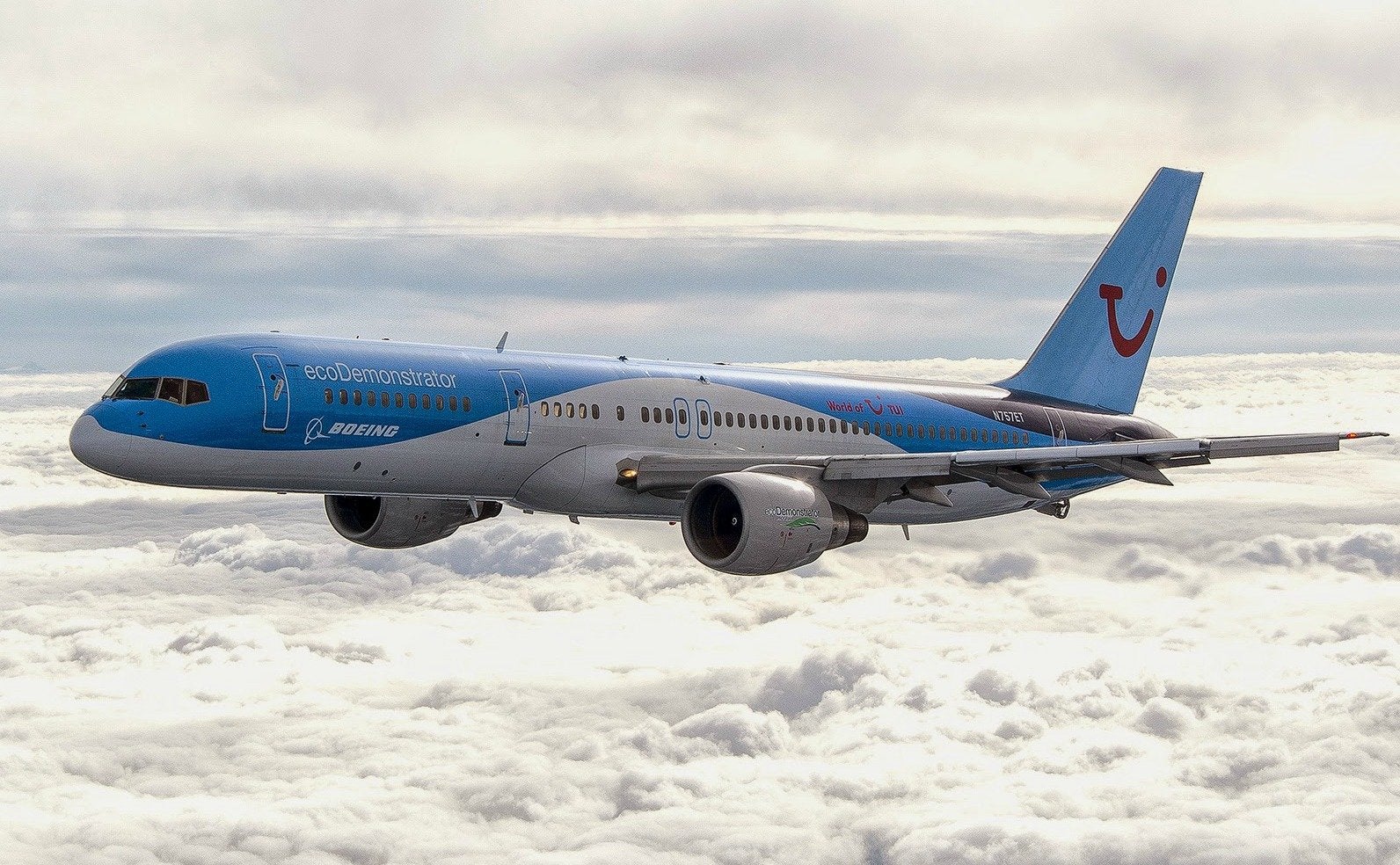
Aircraft of the future could be more fuel-efficient, says NASA, thanks to new non-stick coatings they recently tested that shed insect residue. By staying cleaner and bug-free, the coated wings are more aerodynamic. NASA tested five coatings recently during a two-week project in Shreveport, Louisiana, flying the Boeing 757 ecoDemonstrator. “One of the five coating/surface combinations showed especially promising results,” said Fay Collier, project manager for the environmentally responsible aviation project. “Early data indicated one coating had about a 40-percent reduction in bug counts and residue compared to a control surface mounted next to it.”
Engineers at Langley developed more than 200 coating formulations and tested them in a small wind tunnel, then tested the best of those in flight on the wing of a NASA jet. They selected the best non-stick coatings from those tests to fly on the ecoDemonstrator. Shreveport was chosen for the tests because of its significant bug population. Since most insects fly close to the ground, the tests were done during 15 flights that each included several takeoffs and landings. With the exception of Boeing proprietary technology, NASA knowledge gained through ecoDemonstrator research is made available to the public.