
















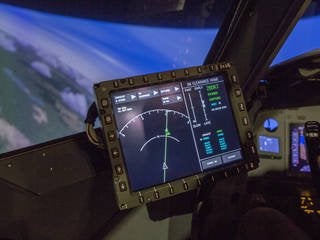
ADS-B technology will help air traffic controllers to implement a new NASA system called “Flight Deck Interval Management,” which aims to make aircraft arrivals more efficient, NASA said this week. NASA now is planning a field test of the system early next year, above Seattle. The cockpit-based technology combines NASA-developed software with off-the-shelf hardware and connects the system to the aircraft’s onboard information and navigation systems. “[Interval Management] allows controllers to deliver the aircraft more precisely and more predictably, which is a huge advantage that helps the airlines and airport operators more efficiently manage air traffic to minimize delays,” said William Johnson, project manager at NASA’s Langley Research Center in Virginia.
The technology is expected to enable air traffic controllers to predict aircraft arrival times within about 5 to 10 seconds, NASA said, a major improvement over the current average of about a minute. Here’s how it will work: Air traffic controllers will determine the ideal goal for spacing aircraft as they approach the airport. A controller then contacts a flight crew, relaying the spacing goal, the trajectory the aircraft should fly, and the ID of an aircraft ahead of them. The pilots then enter all this information into the Interval Management system, which computes a solution with the help of the airplane’s ADS-B unit. The result is a number displayed on a cockpit screen that tells the crew what speed to fly so they can follow the specified aircraft in front of them all the way down to the runway, at a safe distance.
The field demonstration will be flown by a Falcon 900and Boeing 757 supplied by Honeywell, and a Boeing 737 provided by United Airlines, NASA said.

