















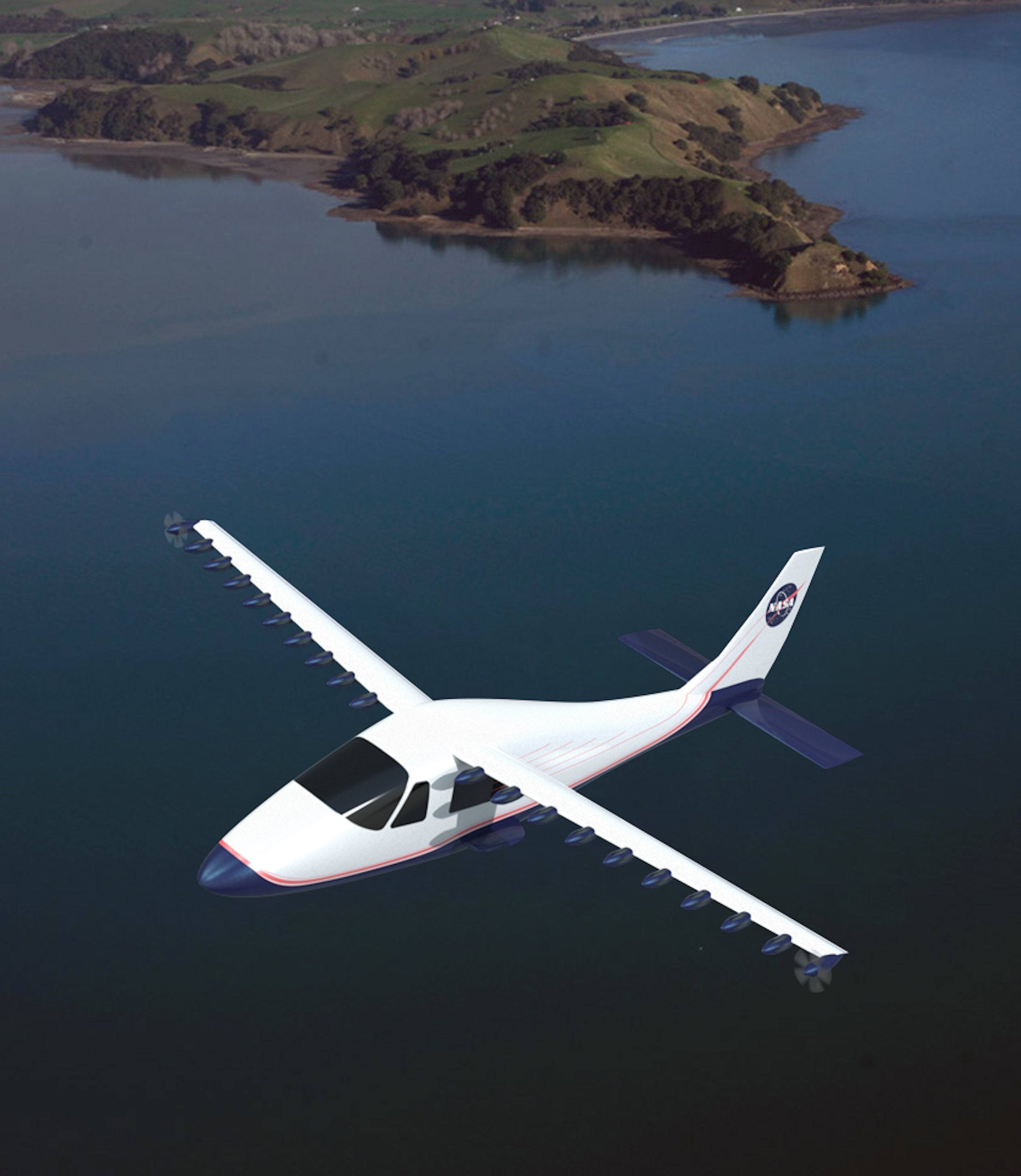
NASA concept
NASA engineers are now testing an airplane wing fitted with 18 electric motors, and they plan to replace the wings and engine of a Tecnam P2006T with an improved version of the system within the next two years. The project, called LEAPTech, for Leading Edge Asynchronous Propeller Technology, “is a key element of NASA’s plan to help a significant portion of the aircraft industry transition to electrical propulsion within the next decade,” according to a NASA news release. The project will test the premise that tighter propulsion-airframe integration, made possible with electric power, will deliver improved efficiency and safety, as well as environmental and economic benefits. Over the next several months, NASA researchers will perform ground testing of a 31-foot-span, carbon-composite wing section with 18 electric motors powered by lithium iron phosphate batteries.
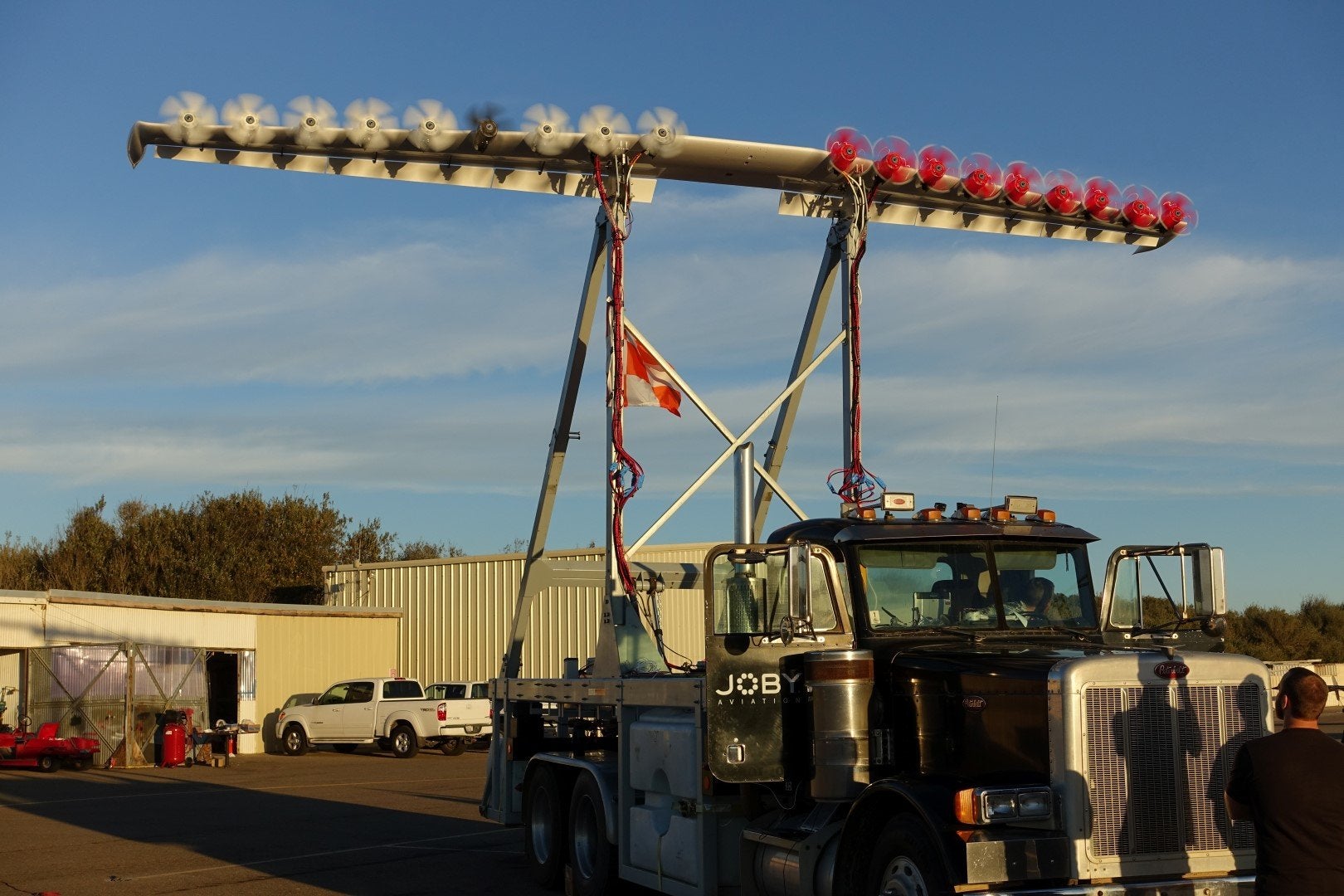
NASA’s truck-based test rig
The test rig is fitted to a specially modified truck, and will be driven at speeds up to 70 mph across a dry lakebed at Edwards Air Force Base. The rig completed preliminary testing last December at Oceano, California. Each motor can be operated independently at different speeds for optimized performance. Key potential benefits of LEAPTech, NASA said this week, include decreased reliance on fossil fuels, improved aircraft performance and ride quality, and aircraft noise reduction. The project is a key element of NASA’s plan to help a significant portion of the aircraft industry transition to electrical propulsion within the next decade. According to Mark Moore, an aerodynamicist at Langley, “LEAPTech has the potential to achieve transformational capabilities in the near-term for general aviation aircraft, as well as for transport aircraft in the longer-term.” Partners in the project include two California companies, Empirical Systems Aerospace (ESAero) in Pismo Beach, and Joby Aviation, in Santa Cruz.
This PDF from a recent public talk provides more details about the technology.