















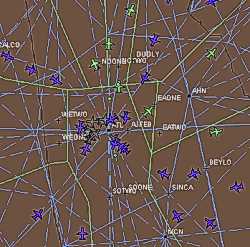
 “Canada, Australia and the United Kingdom are using next-generation precise satellite systems that permit much less than the normal three miles separation between planes,” wrote a columnist in the Chicago Tribune on Sunday, citing David Castelveter, a spokesman for the Air Transport Association, as the source of that information. But on Wednesday, Doug Church, spokesman for the National Air Traffic Controllers Association, said that information is incorrect. “There are only four places in the world where aircraft are allowed to legally be closer than three miles,” Church said in a statement sent to AVweb on Wednesday. “London Heathrow, but only during the daytime in good weather within 15 miles of landing; the United States at most major airports within 10 miles of landing; one terminal area in Sweden; and in Mr. Castelveter’s imagination.” Whether reducing separation between aircraft en route would have any impact on flight delays and airport congestion — or on safety — is unclear.
NATCA Disputes Traffic-Separation Claims

Key Takeaways:
- An initial claim that Canada, Australia, and the United Kingdom utilize next-generation satellite systems to permit less than the standard three-mile aircraft separation was explicitly refuted.
- The National Air Traffic Controllers Association clarified that reduced aircraft separation is only legally allowed in a few specific, limited scenarios: London Heathrow (daytime, good weather, within 15 miles of landing), most major U.S. airports (within 10 miles of landing), and one terminal area in Sweden.
See a mistake? Contact us.

