
















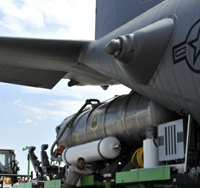
As the wildfire begins in earnest in 2012, the Forest Service is operating with roughly half of the aircraft it had only a decade ago, stirring some controversy about aviation firefighting resources. Earlier this month, President Obama signed a bill to add larger tankers to the Forest Service’s aerial firefighting fleet and, separately, four Air Force C-130s have now been scheduled to join the fight against an active blaze in Colorado. Aside from those aircraft, at least four more Air National Guard aircraft are equipped and ready to go. But, as the Forest Service told Philly.com this week, it can’t request Guard aircraft unless all private tankers are already engaged or otherwise unavailable.
The Air National Guard has eight C-130 cargo aircraft in Wyoming fitted for slurry drops and needs roughly two days notice to respond. And the Forest Service already has eight aircraft on lease from the state of California and Canada. Recent efforts will bring in two BAe-146 aircraft from Montana and another from Nevada. That will bring the Forest Service’s aerial firefighting fleet to 20 large tanker aircraft. Eleven more can be called into service (including National Guard C-130s). Ten years ago, the fleet numbered roughly 45 aircraft. Two fatal crashes led the Forest Service in 2004 to temporarily ground three-quarters of the fleet and resources have been slow to recover. Regardless of the overall size of the fleet, the dynamics of modern aerial firefighting often restricts the number of aircraft that can work any one fire at a time.

