
















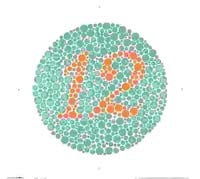
 Using new tests that have been developed by researchers in London, 35 percent of pilot applicants who now fail color-blindness exams would pass, the UK’s Civil Aviation Authority said recently. “The CAA intends to promote this research internationally with a view to gaining acceptance of the [new] test and its incorporation in worldwide medical standards for pilots,” said Dr. Sally Evans, chief medical officer at the CAA. The research, which was co-sponsored by the FAA, was conducted at City University London.
Under current guidelines, pilot applicants with minimal color deficiencies will often fail traditional tests, the CAA said. However, researchers found that some of these individuals may be able to perform safety critical tasks just as well as those with normal color vision. About 8 percent of men and fewer than 1 percent of women have some level of color vision deficiency. [more] Current color vision requirements are open to interpretation and often vary between countries. The new test developed in London is accurate and thorough, the CAA said. Click here for a copy of the full report, published by the UK’s Civil Aviation Authority.

