
















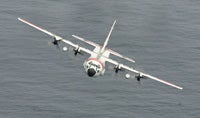
The Coast Guard, Navy and Marines have published reports on an October midair that took the lives of all involved — seven Coast Guard members and two Marines flying in a Military Warning Area, at night, off Southern California. The crash involved a Coast Guard C-130 and Marine Cobra AH-1. The C-130 was flying search and rescue; the helicopter was flying a practice mission in formation with three others. The Coast Guard says its C-130 crew had been in contact with Navy controllers (who were monitoring the Warning Area) for more than two and one-half hours prior to the midair and may have expected the controller to provide separation. The Marine pilots were flying without an active anti-collision light, or transponder, which gave the C-130’s crew “little opportunity” to see and avoid the helicopter, according to the Coast Guard. While the Marines’ report was not made public, Tuesday, the Coast Guard and Navy offerings differed slightly in their presentation of contributing factors.
Both the Navy and Coast Guard released reports that generally called the accident a tragic confluence of events and both seemed to agree that failure to “see and avoid” played a large part. But where the Navy stressed that the prevailing rules were “see and avoid,” the Coast Guard noted that its pilots did not fly with night-vision goggles in their C-130 and would have had trouble spotting the darkened helicopter formation. The Coast Guard issued a series of recommendations. One recommends that the Navy establish guidelines for inter-agency communications during search-and-rescue operations on the West Coast, similar to those it already has in place on the East Coast. The Navy called the collision “entirely avoidable” and highlighted a need for better communication between controllers and pilots.

