
















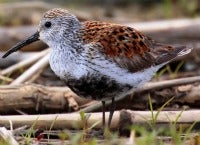
Bird strikes are a perennial problem for aviators, but in Santa Barbara, Calif., airport managers found that improving bird habitat near the airport actually helped prevent bird-aircraft conflicts. Workers reconfigured a 10-acre wetland area to restore tidal flows. They found that the new habitat attracted small shorebirds such as sandpipers, which tend to fly in low numbers close to the ground and rarely head inland across the runways. In contrast, the unrestored area had provided only seasonal standing ponds, which attracted migratory waterfowl such as Canada geese and mallards, which often flew across the runways. The habitat change has reduced the number of wildlife strikes, the airport said, enhancing both aviation safety and environmental preservation.
The project was a win-win for Santa Barbara, FAA spokesman Ian Gregor told Miller-McCune. However, he said the agency doesn’t see that airport’s success as a template for others. “It’s a good project for Santa Barbara,” he said. “A similar project at another coastal airport could have the exact opposite effect.” At least one other airport has shown interest in trying the new strategy — the Naval Air Station at nearby Point Megu, where bird strikes are a recurring problem.

