
















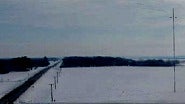
A recent FAA proposal that suggested a protocol for marking meteorological evaluation towers to make them more visible to low-level aviators didn’t go far enough, the NTSB says. “The NTSB is concerned that the application of the [FAA Advisory Circular] is voluntary, and, without mandatory application and marking requirements for METs, many METs will still be constructed without notice to the aviation community and will fail to be marked appropriately,” the board said in a Safety Alert (PDF) issued on Friday. Meteorological Evaluation Towers (METs) are used to measure wind speed and direction during the development of wind energy facilities, and many fall just below the 200-foot threshold for FAA-required obstruction markings. At least three fatal accidents have involved MET tower collisions, the NTSB said, the most recent one in January.
According to the Safety Alert, the METs are hard to see from the air, and pose a threat to low-flying aircraft operations such as helicopter emergency medical services, law enforcement, animal damage control, fish and wildlife, agriculture, and aerial fire suppression. The NTSB recommends that pilots should “maintain vigilance for METs” when conducting low-altitude flights and encourage the marking of METs in their area. Also, if pilots locate a MET, they should let other local pilots know about it. FAA Safety Team members are exploring methods of notifying pilots of the location and height of METs and are working to educate MET owners, builders, and communities on flight-safety issues, the NTSB said. The National Agricultural Aviation Association welcomed the NTSB’s effort and agrees that the FAA marking protocol should be mandatory. “The airspace aerial applicators work in is becoming increasingly obstructed by transmission lines, communication towers, wind turbines and hard-to-see meteorological testing towers,” says the NAAA. “That poses a real concern to the aerial application industry, not just in terms of safety, but also in terms of accessing farmers’ fields to treat their crops, since many prime wind-energy development areas are located in rural, agriculturally rich areas.”

