
















|
Don’t see a video screen?
Try disabling ad blockers and refreshing this page. If that doesn’t work, click here to download the video directly. |
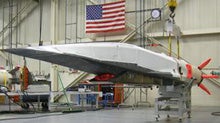
An X-51A Waverider scramjet powered test vehicle flew in the program’s second flight test, June 13, but failed to transition to full power burning JP-7 after the scramjet engine was lit. Air Force Flight Test Center officials say the vehicle was dropped at approximately 50,000 feet from a B-52H Stratofortress flyingin the Point Mugu Naval Air Test Range over the Pacific Ocean. Itaccelerated with the help of a solid rocket booster to beyond Mach 5, at which point the vehicle’s air-breathing scramjet engine was lit on ethylene. According to the Air Force, then “the vehicle experienced an inlet un-start” as it attempted to transition to JP-7.
The Air Force says the vehicle optimized for restart but fell into the ocean before a successful restart was achieved. A 2010 flight was arguably more successful. In May of 2010, a previous X-51A test vehicle ran for 200 seconds burning JP-7 and reached a speed of roughly Mach 5, which translates to about one mile per second. That flight was meant to achieve a 300-second burn and top out near Mach 6 at 70,000 feet but began slowing after Mach 5. With the latest flight now on the books, researchers at least have a “large amount of telemetry data” to work with. The program began with four X-51A flight test vehicles and a goal of reaching Mach 6 in hypersonic flight. The next flight is scheduled for late 2011, but that schedule is flexible. In 2004, NASA’s X-43 flew at Mach 9.7. Notably, that vehicle burned hydrogen and managed its speed for 12 seconds before melting.

