
















|
Don’t see a video screen?
Try disabling ad blockers and refreshing this page. If that doesn’t work, click here to download the video directly. |
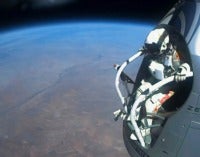
When skydiver Felix Baumgartner stepped out of his capsule 24 miles high above the Earth on Sunday, he was all alone up there, but he had 8 million people watching on YouTube — a new record for an online live event. “On the step, I felt that the whole world is watching,” Baumgartner said after the jump. “I said, I wish they would see what I see. It was amazing.” On Tuesday, Red Bull released new footage from Baumgartner’s point of view as he made that long fall through the upper stretches of the atmosphere. Baumgartner also posted a fan video depicting his now-famous jump in a Lego version.
The success of the jump and the number of online viewers drew attention from the major news organizations around the world and inspired commentary about the changing nature of communications and marketing. “Red Bull has gone further than almost any other brand in demolishing the line between the company’s ‘primary’ business — making energy drinks — and the corollary business of creating content and experiences for the people that it considers its target audience for those drinks,” said an article in Fast Company. The scientific aspect of the jump also has earned kudos. “We know a little bit more about how a human being might survive … under great duress,” science correspondent Miles O’Brien said on PBS. The voluminous data collected during the project could be used to help design safer ejection systems from rockets or spacecraft at high altitudes. “There was a very interesting piece of science in all of this,” O’Brien said.

