
















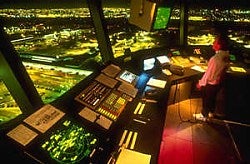
NextGen air traffic control improvements are championed by government officials, but one former government official argued through an editorial this week that ATC may fare better in private hands. According to Peter Orszag, former director of the Office of Management and Budget, NextGen is “a step in the right direction.” But because it’s being rolled out in stages, he argues it will take too long to implement. The former director cites Canada’s nonprofit corporation NAV Canada and says the answer to a better air traffic system in the U.S. is the private sector. And user fees. Not everyone agrees.
Orszag is now the vice chairman of global banking at Citigroup Inc. His opinion is that a user-based revenue model would ensure that those who use the system would pay for it. That, says Orszag, would also keep funding debates outside of the political process. Orszag says that while NAV Canada suffered initially, it now offers a nonprofit example that compares favorably against the FAA. “It tends to be more responsive to innovation and better able to make improvements in technology, investing in the needs of its user airlines,” he said. Opposition to Orszag’s approach may have already formed. Nine groups, including AOPA, EAA, GAMA, and NBAA, issued “unified opposition” to a deficit-reduction plan proposed by President Obama, Monday, that included user fees for some general aviation flights. And questions remain. One raised by another editorial asks what leverage users would have if private controllers decided to strike and suggests that costs borne by airlines would cause ticket prices to skyrocket.

