
















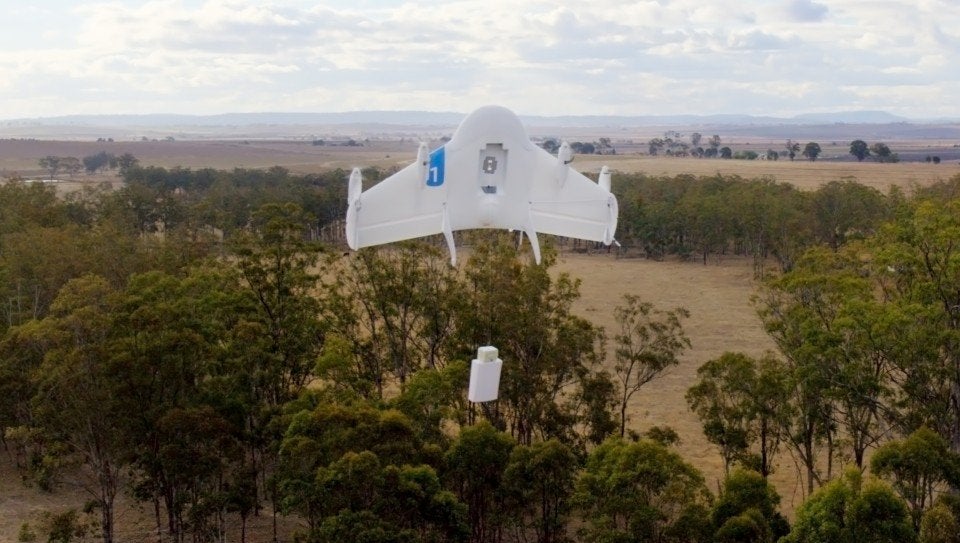
The FAA says it hasn’t yet dealt with more than 30 requests from companies and groups that want to fly small unmanned aerial systems for commercial purposes in the U.S. The companies, like Wilbur-Ellis Co., a California-based agribusiness corporation, have been filing Petitions for Exemption from a host of regulations that add up to the FAA’s current prohibition on commercial drone use. Wilbur-Ellis wants to use UAS vehicles to survey agricultural operations but other companies are proposing uses ranging from motion picture work to inspecting smoke stacks. The exemption requests have been trickling in a few at a time over the past few months but an FAA spokesperson said the agency hasn’t made a decision on any of them. The perceived foot-dragging may have led to Google’s announcement last week that it’s testing Project Wing drone package delivery in Australia.
According to Forbes blogger Gregory S. McNeal, Google did the testing in Australia because of “dithering” by the FAA on moving forward with more permissive UAS regulations. He noted that Amazon has gone the exemption route to try to test its well-publicized aerial delivery proposal but in the absence of a decision from the FAA may have to go overseas, too. In a letter accompanying the exemption request, Paul Misener, Amazon’s VP of global public policy, said the company wants to do the research on U.S. soil, namely property it owns near Seattle. Misener said Prime Air has been able to make significant strides toward a workable delivery system by testing indoors and in other countries but would “prefer to keep the focus, jobs, and investment of this important research and development initiative in the United States.”

