

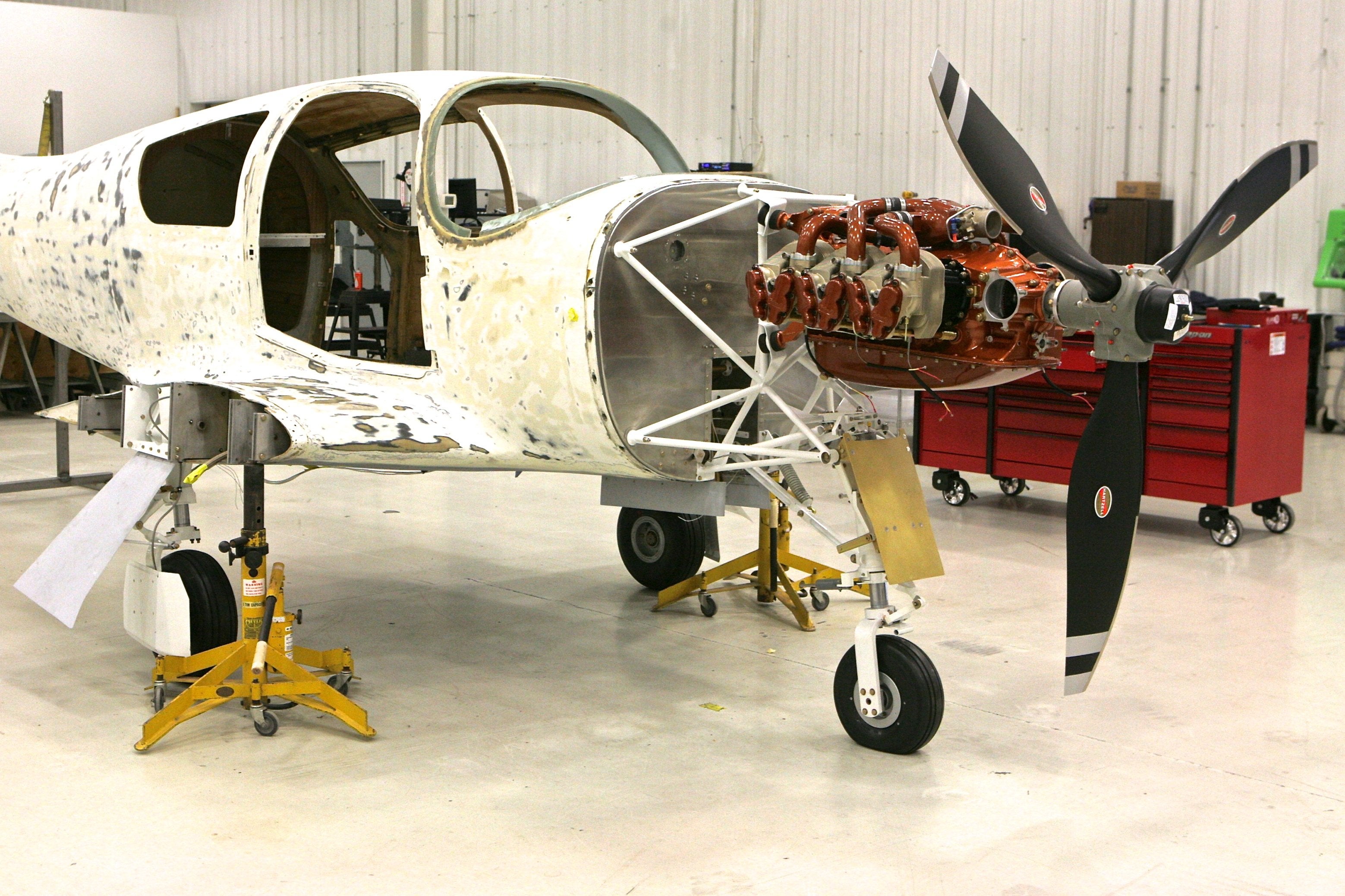
Restoration of a Windecker Eagle, the first composite aircraft to be FAA-certified, is on schedule for completion this summer, with hopes to show it at EAA AirVenture in Oshkosh, Wisconsin, this July. A Chinese entrepreneur, Wei Hang, has purchased two copies of the Eagle and commissioned a restoration team in Moorseville, North Carolina, to rebuild what will be the only flying model. “Mr. Hang was attracted to the Windecker Eagle because of its historical significance, rarity, style and performance,” said Don Atchison, head of the restoration team. “He will own a truly unique aircraft when it’s finished and flying again.”The Eagle was known to have outrun the Bonanza, the Cessna 210 and the Bellanca Viking in side-by-side-flights, and one was used in military research for developing composite-based stealth technology, the restorers said.
The Windecker was designed in the 1960s by two dentists, Leo Windecker and his wife, Fairfax. The Eagle first flew in 1967 and was certified in 1969, costing the Windeckers $20 million. They built two prototypes and six copies of the airplane but their company then ran out of money and production ceased. The two Eagles Hang purchased and brought out of storage had spent years outdoors. “The fiberglass has actually held up much better than the metal components in the airframe,” Atchison said. “We’ve replaced most everything from the firewall forward, and refurbished to ‘better than new’ the landing gear, flight controls and mechanical, electrical, hydraulic and fuel systems. The windows, windshield and interior will be completely new and there will be a number of upgrades in the panel when it flies again.” The Smithsonian National Air and Space Museum says on its website the Windeckers researched fiberglass-reinforced plastic structures in the late 1950s to look at lighter materials suitable for aircraft construction. Working with Dow Chemical, they patented a material called “Fibaloy.”