















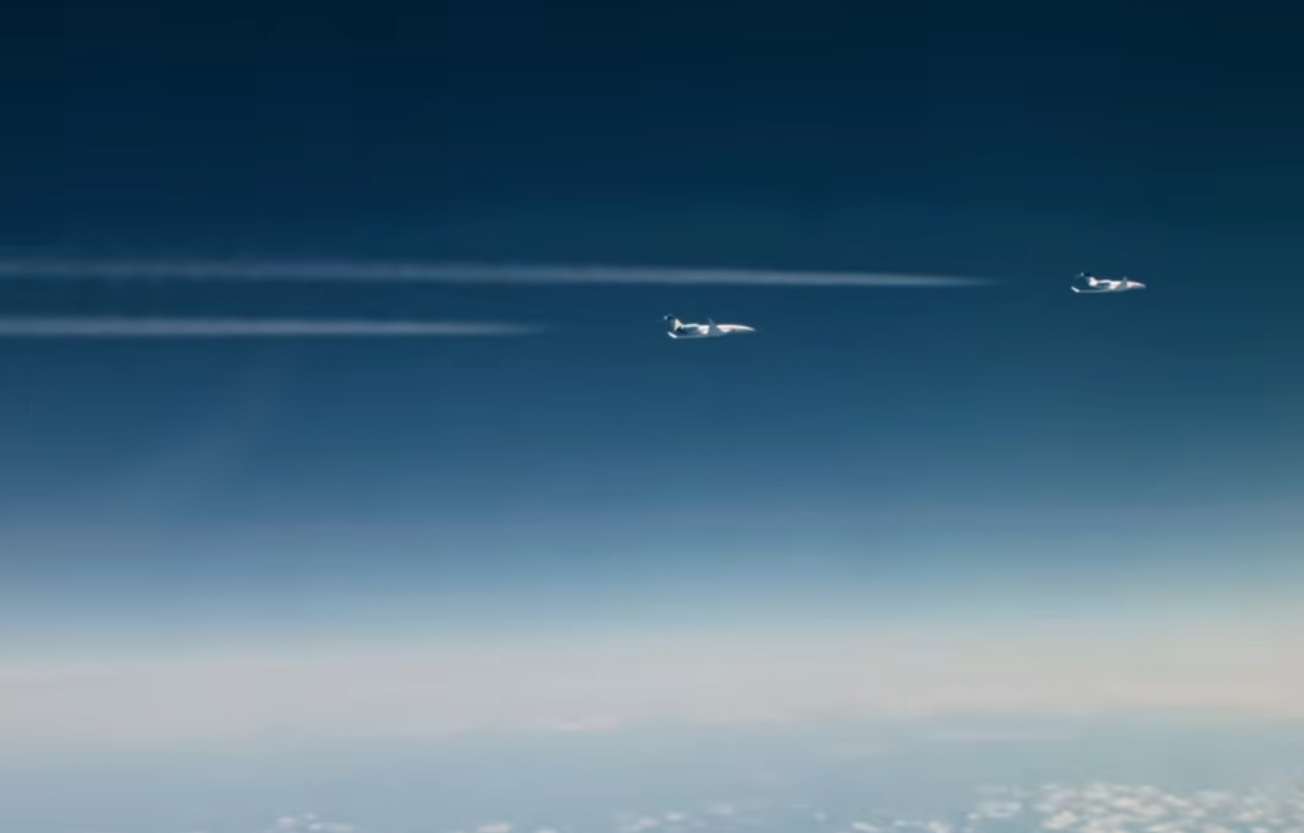

Gulfstream Tests 100% SAF At 50,000 Feet

Preliminary results indicate reduced particle emissions associated with contrail formation.

Gulfstream Tests 100% SAF At 50,000 Feet
[Credit: Gulfstream via YouTube]
Gemini Sparkle

Key Takeaways:

  • Gulfstream Aerospace and Rolls-Royce completed high-altitude flight tests with a G800 powered by 100% Sustainable Aviation Fuel (SAF) to examine emissions up to 50,000 feet.
  • The G800's flight marked its first use of 100% SAF, while a modified G700 acted as an airborne laboratory to measure particulate emissions.
  • Preliminary results indicated a measurable reduction in particles contributing to contrail formation when using 100% SAF compared to conventional jet fuels.
  • The data from these tests will help inform future fuel standards and lay the groundwork for certifying current engines to operate on 100% SAF, as commercial use is currently limited to 50% blends.
See a mistake? Contact us.

Gulfstream Aerospace and Rolls-Royce said this week that they completed a high-altitude flight-test campaign examining the emissions produced by 100% sustainable aviation fuel at altitudes up to 50,000 feet.

A Gulfstream G800 powered by Rolls-Royce Pearl 700 engines conducted the flights alongside a modified G700. The G700 served as an airborne laboratory and measured particulate emissions and atmospheric conditions while flying in close formation. The campaign also marked the first G800 flight using 100% SAF.

[Credit: Gulfstream]

Researchers compared conventional Jet-A, low-sulfur Jet-A and 100% hydroprocessed esters and fatty acids SAF. Rolls-Royce said preliminary results showed a measurable reduction in particles that contribute to contrail formation. The FAA, NASA, German Aerospace Center and Missouri University of Science and Technology participated in the project.

Although the test used unblended SAF, current fuel standards generally limit its commercial use to blends of up to 50% with conventional jet fuel, depending on the production pathway. Rolls-Royce said the campaign data will help inform future fuel standards and that demonstrating its current engines can operate on 100% SAF lays groundwork for certification.


Matt Ryan

Matt is AVweb's lead editor. His eyes have been turned to the sky for as long as he can remember. Now a fixed-wing pilot, instructor and aviation writer, Matt also leads and teaches a high school aviation program in the Dallas area. Beyond his lifelong obsession with aviation, Matt loves to travel and has lived in Greece, Czechia and Germany for studies and for work.
Sign-up for newsletters & special offers!

Get the latest stories & special offers delivered directly to your inbox

SUBSCRIBE