















This article first appeared in KITPLANES Magazine.
The long-awaited Modernization of Special Airworthiness Certification (MOSAIC) final rule was signed by the FAA Administrator on July 18, 2025, marking the most significant change to the light aircraft landscape since the Sport Pilot/Light Sport Aircraft (LSA) rule was introduced in 2004. While the rule is complex—the final document spans over a thousand pages—its core impact on the Experimental/Amateur-Built (EAB) community can be distilled into a few key areas that represent a massive expansion of freedom and utility for pilots and a profound shift in the maintenance landscape for owners.
For years, the world of homebuilding has offered performance and capability that the factory-built LSA world could not match due to restrictive weight and speed limits. A central philosophy behind MOSAIC is to make certificated LSAs a more appealing alternative to EAB aircraft. The agency’s reasoning is that LSAs, which are built to an industry consensus standard, are “higher on the safety continuum” than EABs, which have no mandated design or production standards. To achieve this, the FAA has expanded the LSA category so dramatically that new LSAs will directly compete with high-performance homebuilts.
But in doing so, the FAA has also handed the EAB community a string of victories that will change the way we fly and maintain our aircraft. Here’s what you need to know.
Big News for Pilots
For pilots of homebuilt aircraft, particularly those flying as Sport Pilots, MOSAIC is a declaration of new freedoms. The rule decouples the aircraft a Sport Pilot can fly from the definition of a Light Sport Aircraft. Instead of being limited to aircraft that meet the old LSA definition, a Sport Pilot can now fly any aircraft—including an EAB or a legacy type-certificated plane—as long as it meets the performance parameters laid out in the regulations. And those parameters have expanded significantly.
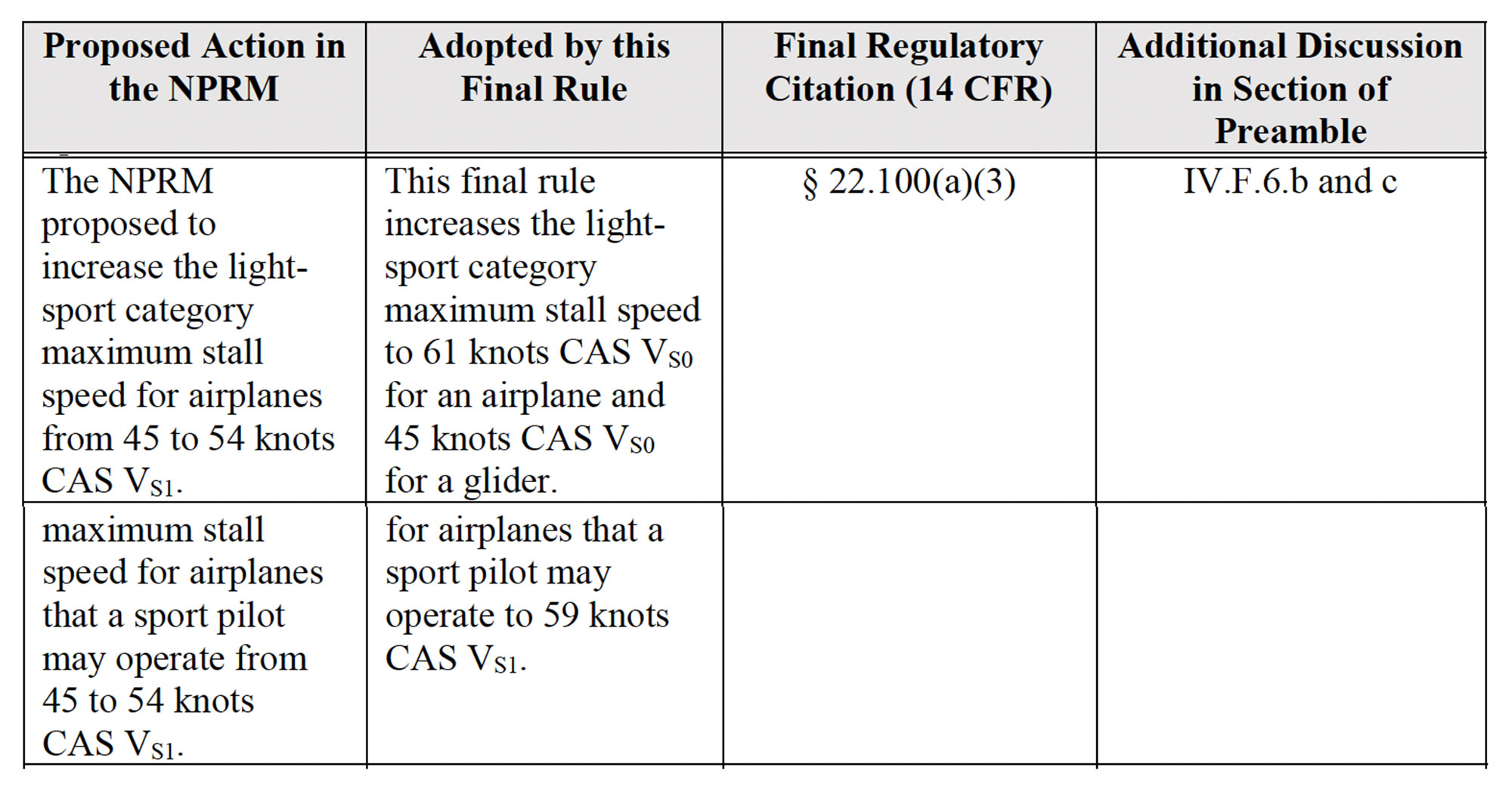
The single biggest change is the increase in the maximum stall speed for airplanes a Sport Pilot can operate. The old limit was 45 knots calibrated airspeed (CAS) without flaps (VS1). The final rule raises this limit to 59 knots CAS (VS1). This is a game-changer, as it brings a massive number of popular homebuilt designs—as well as legacy aircraft like the Cessna 172—into the Sport Pilot world.
Getting Complex (With an Endorsement)
Previously, Sport Pilots were restricted to aircraft with fixed-pitch propellers and fixed landing gear (with exceptions for seaplanes and gliders). MOSAIC opens the door to more sophisticated aircraft. A Sport Pilot can now get logbook endorsements to operate aircraft with retractable landing gear and airplanes with manually controllable-pitch propellers.
This means a Sport Pilot can now legally fly a huge portion of the existing EAB fleet, including many high-performance retractable-gear designs, after receiving the appropriate training.
Flying After Dark
The prohibition on night flight for Sport Pilots has been lifted. With specific training, a logbook endorsement, and by meeting medical requirements, Sport Pilots can now operate at night. This is a huge increase in utility, removing the pressure to “get home before dark.” To fly at night, a Sport Pilot must hold at least a third-class medical certificate or meet the requirements for BasicMed.
Four-Seat Freedom (Sort of)
Sport Pilots can now operate airplanes designed with up to four seats, but only carry one passenger. This is another major change that brings popular four-place homebuilts into the fold. However, the operational limitation remains—a Sport Pilot is still restricted to carrying only one passenger. So while you can fly a four-seater as a Sport Pilot, you can only fill two of the seats.
A Game-Changer for Condition Inspections
Perhaps the most significant change for EAB owners is a massive new privilege for repairmen. The final rule expands the privileges of a holder of a repairman certificate (light-sport) to perform the annual condition inspection on an Experimental/Amateur-Built aircraft.
This is huge. Previously, unless you were the original builder of your EAB and held the specific repairman certificate for that airframe, you had to find an A&P mechanic to perform your annual condition inspection. Now, any EAB owner can take a 16-hour LSA repairman—inspection course and, once certificated, legally perform the condition inspection on their own amateur-built aircraft, provided it is in the same category (e.g., airplane) as their training. For those who want to do more, completing a longer LSA repairman—maintenance course allows a person to perform the condition inspection on any EAB of the same category, not just one they own.
This change directly addresses a long-standing challenge in the EAB community—the difficulty and expense of finding mechanics willing and able to work on and inspect homebuilt aircraft.
The New Choice: To Build or To Buy?
By radically expanding the LSA category, the FAA has created a new dynamic in the marketplace. The new generation of LSAs can now have:
- Up to four seats (for airplanes)
- No weight limit (performance is limited by stall speed instead)
- A maximum speed of 250 knots (VH)
- Retractable landing gear and constant-speed propellers
- Alternative powerplants, including electric and turbine engines
These specifications put new LSAs in direct competition with popular high-performance EABs. This presents a new choice for someone entering the market: build a high-performance kit or buy a factory-built LSA with similar capabilities that is constructed to an accepted consensus standard.
It is important to note, however, that you cannot convert your existing EAB aircraft into an LSA. The rule makes it clear that an aircraft previously certificated as an EAB would likely not be eligible for an LSA certificate because the manufacturer cannot sign a statement of compliance for an aircraft they did not build, and the amateur builder does not hold the design and manufacturing data required to do so.
At the heart of these new, more capable LSAs is a fundamental shift in certification: a 61-knot limitation. This refers to the maximum stall speed in the landing configuration (VS0) an airplane can have to be eligible for LSA certification. By replacing the old, restrictive weight limit with this performance-based standard, the FAA is allowing manufacturers to build heavier, more robust aircraft. This single change enables designs with better handling in turbulence, increased useful load to accommodate modern passengers and fuel loads, and the structural integrity to incorporate new safety features and technologies like electric propulsion. It’s this higher stall speed that allows new LSAs to have the size and performance to truly compete with the homebuilt market, aligning them with the proven safety benchmark of the Primary Category.
It is important to distinguish this aircraft certification standard from the pilot operational limitation. While a new airplane can be certificated as an LSA with a stall speed up to 61 knots VS0, a Sport Pilot is limited to flying airplanes with a maximum stall speed of 59 knots in the clean configuration (VS1). This means that some newly designed, higher-performance LSAs may require a pilot to hold a private pilot certificate or higher to legally fly them.
Based on the FAA’s final rule document, the elements of MOSAIC will go into effect on a staggered timeline with two key dates after its publication in the Federal Register. New Sport Pilot privileges will become effective 90 days after the rule is published. The more fundamental changes to aircraft certification, which require time for industry to develop and revise consensus standards, will go into effect one year after publication. Changes to operating limitations for Restricted Category and certain Experimental aircraft will also take effect at this later date to allow the FAA time to develop and publish the associated procedures.
Ultimately, the MOSAIC rule is a landmark regulation that reshapes the landscape for personal aviation. For the homebuilder community, it offers expanded freedoms for pilots and a long-sought-after solution for maintenance, ensuring the vibrant EAB world will continue to thrive.

IMHO we could have had this freedom and flexibility, five years sooner if Dan J and Roy, B and other industry lobbyists had not badgered the FAA for commercial/CFI-related privileges for sport pilots and LSA that were of no f-ing use to 98% of us. I will never forgive them for denying older pilots who have recently died the opportunity to legally continue flying their beloved 172s and 7ECA Citabrias without risking a third class medical… failing which they would never fly anything again. Selfish and despicable. They should have left the FAA alone to approve the Vs, Vh and four seat change BEFORE muddying the waters and delaying basic adoption with their complex corporate profit-driven demands.
Can a LSA aircraft be certified for IFR?