















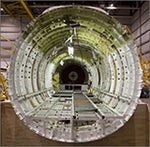
 Lockheed Martin intends to have a prototype Advanced Composite Cargo Aircraft in the air by October, just one year after winning the $50 million contract to produce the plane. The design may be roughly based off of a highly modified Dornier 328J regional jet, but made of synthetic fibers, resin and epoxy instead of metal. Where comparable aircraft could be built from up to 4,000 parts, the new aircraft will be made of just 306 parts and benefit from a weight loss of up to 30 percent versus conventional cargo aircraft. The Air Force is hoping that savings could allow heavier payloads, longer range and significant fuel savings while offering a structure more resistant to corrosion and fatigue. Composite materials are not less expensive than metal, but a faster build time, if achieved, will also contribute to an overall reduction in cost. The prototype aircraft will be smaller than the aging C-130 Hercules, but also more nimble and capable of delivering troops to shorter, rougher strips closer to the front lines.
Lockheed Martin’s Composite Transport

Key Takeaways:
- Lockheed Martin is scheduled to fly a prototype Advanced Composite Cargo Aircraft (ACCA) by October, just one year after securing its $50 million contract.
- The ACCA's composite construction drastically reduces the number of parts from thousands to just 306, leading to a 30% weight reduction compared to conventional aircraft.
- This design promises heavier payloads, longer range, and significant fuel savings for the Air Force, while also being more nimble than the C-130 for troop delivery to challenging front-line strips, offering improved resistance to corrosion and fatigue, and potential overall cost reductions from faster build times.
See a mistake? Contact us.

