














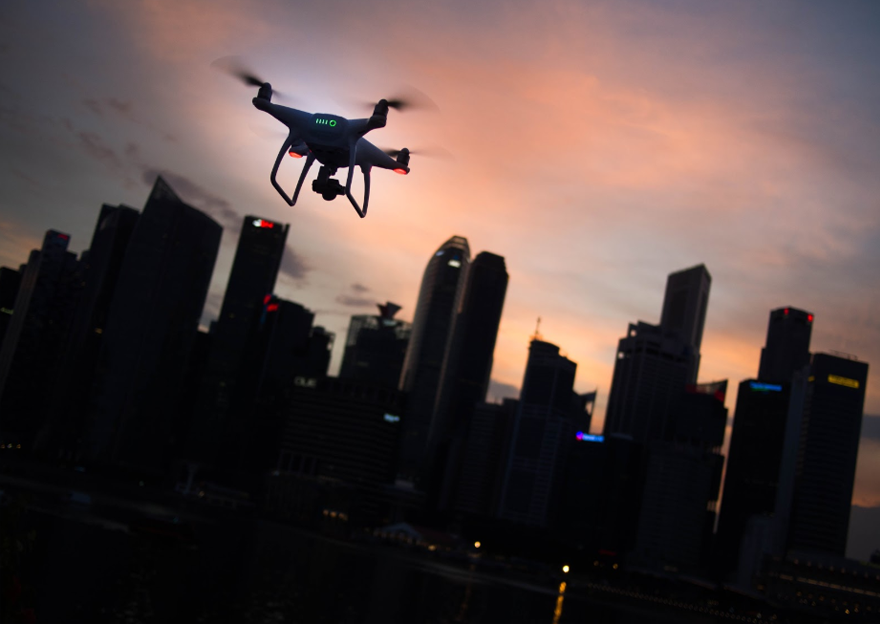

A critical step in the integration of unmanned aircraft into the National Airspace System is scheduled for Dec. 20 as the FAA releases its Notice of Proposed Rulemaking on remote identification requirements for drones. The agency will require that all drones emit some kind of signal giving aircraft and ownership information and that’s considered fundamental to all the other rulemaking that will follow. The agency doesn’t expect to make a decision on remote ID requirements for at least two years after the publication of the NPRM. “There’s probably no schedule that we could ever show that would be fast enough [for implementation of remote ID],” Jay Merkle, director of the FAA’s UAS integration office, is quoted by Avionics International as saying at the Drone Advisory Committee meeting earlier this month.
Remote ID is considered essential by the FAA for beyond visual line of sight (BVLOS) operations and law enforcement wants to be able to identify reckless or unlawful operators. Just how those signals are transmitted and collected is the main technical issue and so far Bluetooth, Wi-Fi and dedicated networks have been proposed. Industry groups are naturally pulling for the most cost-effective solutions and there is still plenty of discussion on what information such “digital license plates” should provide.
