
















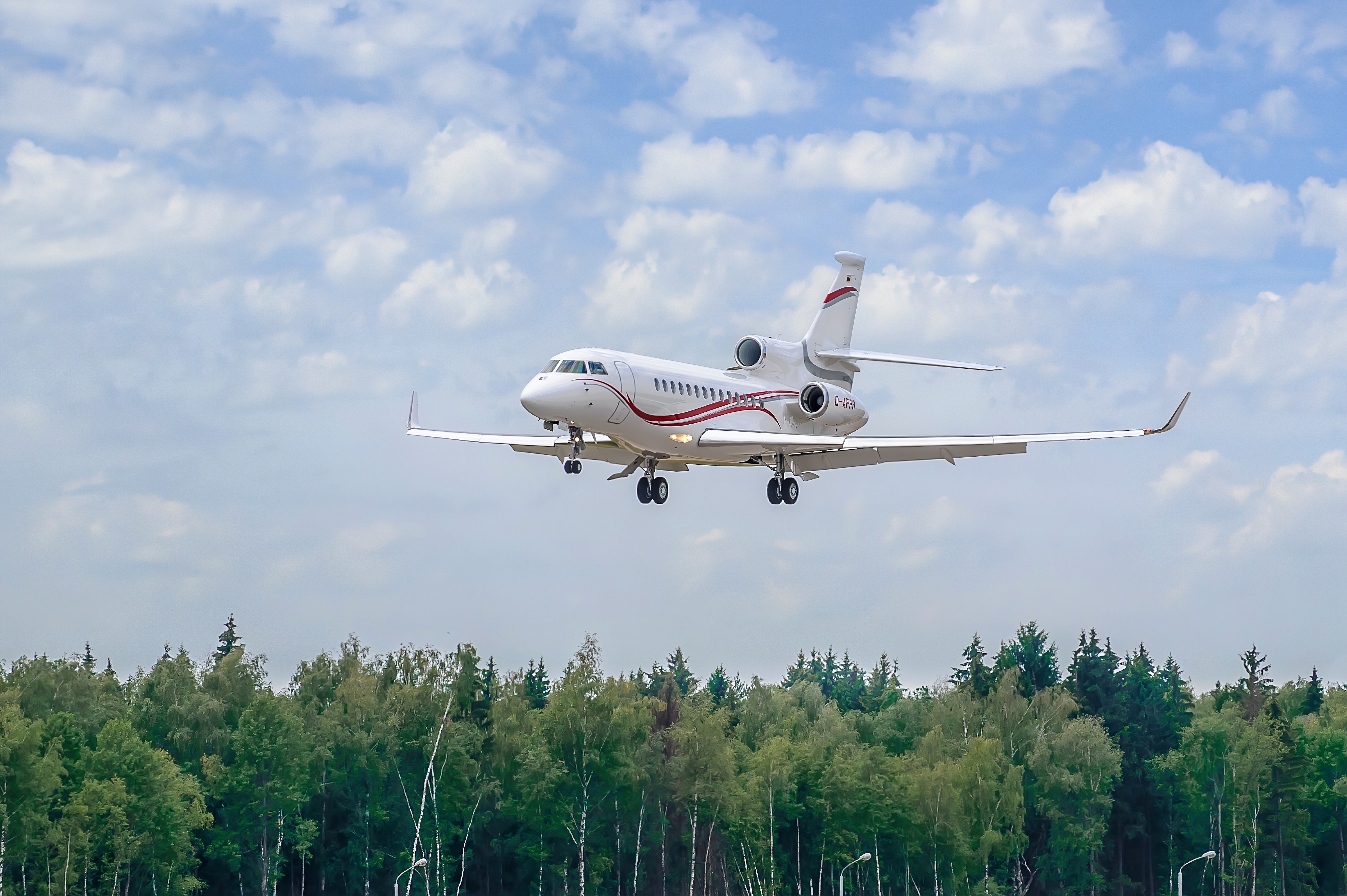

The National Business Aviation Association’s (NBAA’s) latest accident and incident analysis is highlighting stabilized approaches as a continuing area of concern for business aviation operators.
The report reviewed 40 safety events involving turbine-powered business aircraft during the first quarter of 2026, including six fatal accidents. Drawing on FAA and NTSB data, the analysis found that many of the events reinforce the importance of adhering to stabilized approach criteria, even as investigations into several accidents remain ongoing.
“While investigations into many of these events are ongoing and probable causes have yet to be determined, the data already points to the need for strict adherence to stabilized approach criteria,” NBAA Director of Safety and Flight Operations Mark Larsen said in announcing the report.
The analysis recorded 25 accidents and 15 incidents between January and March. Of the accidents, seven involved business jets, including one fatal crash near Bangor, Maine. Ten involved business turboprops, including three fatal accidents, while turbine helicopters accounted for eight accidents, two of them fatal.
Beyond approach-related concerns, NBAA said runway excursions, landing-gear events and environmental factors such as terrain and adverse weather continued to appear as common themes across the quarter’s accident record.
The member-only analysis tool allows NBAA members to examine safety events by aircraft category, operation type and phase of flight, while also providing access to 10 years of historical data. NBAA said the resource is intended to help operators identify trends and incorporate real-world accident scenarios into safety reviews and recurrent training programs.
The first-quarter report follows similar analyses released for the final two quarters of 2025.


“strict adherence to stabilized approach criteria” goes both ways. How often does ATC dump an airplane inside of the approach gate because that’s the only way ATC can make the hourly arrival quota? Accident/incident investigations seem to have ceased criticizing ATC for imposing an unstabilized approach on pilots or otherwise compromising safety in order to meet capacity targets. In the 2009 Turkish Air accident at Amsterdam’s Schiphol airport, the investigation actually exonerated ATC for making pilots dive down to capture the glideslope from above, past the final approach fix, by saying that such had become routine at Schiphol and making no recommendation to fix it!
Lopsided investigations and analyses don’t make aviation safer and may actually initiate the de facto acceptance of bad practices or embed them deeper.
You would think stabilized approaches would be as much required in the corporate world as they are in the 121 world. I have only flown military, 135, and 121, no corporate jets.
I take some pride, or at least think it’s a useful skill to polish, coming into my 400’ long 13% grade strip different every time! Various heights, angles etc., and then I just deal with it, considering it keeps me sharper than landing the exact same way every time, more fun also. BUT, when at an airport I fly like any one else, I get the need for a stabilized approach, at least as for traffic avoidance reasons, no one likes wonky approaches while mixing with others.