















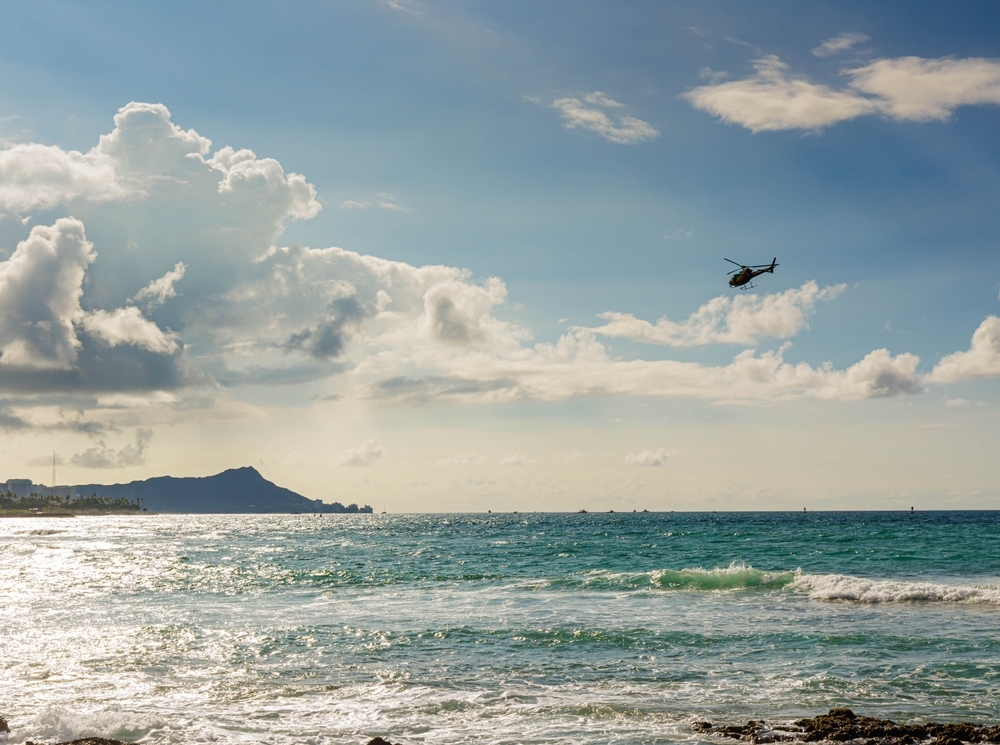

The FAA has denied a Hawaii helicopter tour company’s request to resume a novel operation in which passengers jump from a hovering helicopter into the ocean for snorkeling and scuba excursions.
According to HawaiiNewsNow, Trident Adventures had petitioned the agency for an exemption from federal passenger-restraint requirements, allowing customers to unbuckle while the helicopter hovered about 10 to 35 feet above the water. The company’s “helocast” operation had been suspended while the petition was considered.
The FAA rejected the request after determining that Trident’s proposed safeguards did not provide an equivalent level of protection to the existing restraint requirements. The agency specifically cited the potential for passengers to lose their footing because of aircraft movement, turbulence, windblast, rotor downwash or sudden control inputs, as well as simple human error.
The concern was particularly focused on the moment passengers move from a seated, restrained position inside the helicopter to standing unrestrained on the aircraft’s step before entering the water.
Trident argued that its operating history, training, procedures and conservative limitations provided an acceptable level of safety. The company said that it had conducted roughly 3,500 helicopter jumps since its inception without a safety incident. It also said it plans to continue its Hawaii operations, including diving and snorkeling activities.
Meanwhile, U.S. Rep. Ed Case, (D-Hawaii), had opposed the petition, arguing that passenger restraint requirements should apply regardless of how low or stable an aircraft is operating. He welcomed the FAA’s decision.
The ruling also comes amid separate scrutiny of Trident’s operations in Hawaii. The state fined the company $10,000 earlier this year over unauthorized commercial water-drop operations in the Pūpūkea Marine Life Conservation District on Oahu’s North Shore.
Trident could appeal the ruling, although the company has not indicated what action it will take next.

Trident needs to get with the program and follow the new Trump regulation/pardon protocol: massive bribe FIRST, regulatory approval/pardonh to follow. https://www.cato.org/blog/embarrassment-riches