















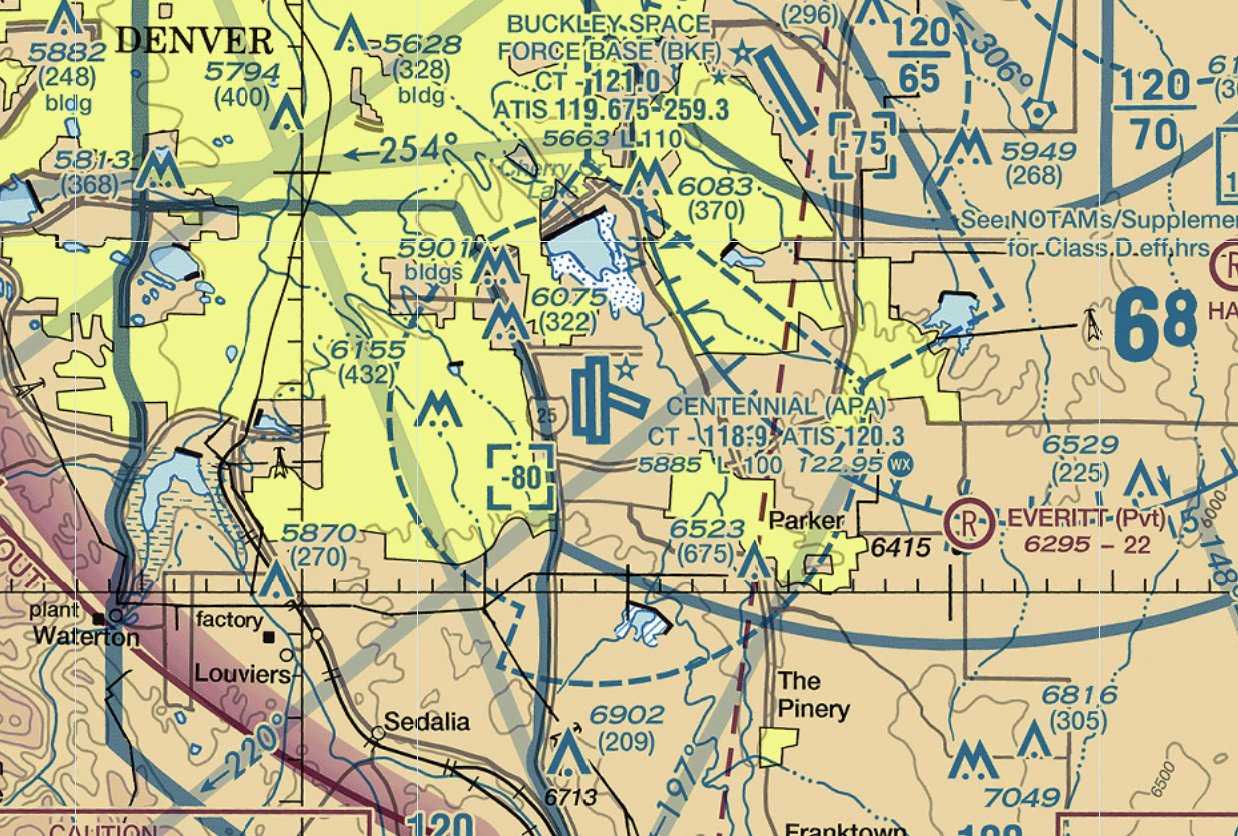

The FAA has imposed new restrictions on flight operations at Centennial Airport (KAPA) near Denver, prohibiting touch-and-goes and limiting parallel departures and other pattern work. AOPA raised concerns Thursday about the changes, particularly the lack of advance notice to pilots at one of the nation’s busiest general aviation airports.
FAA Cites Departure Conflicts
According to AOPA, the FAA directed controllers to suspend simultaneous departures from Centennial’s parallel runways until additional safety measures can be implemented. Agency officials cited potential conflicts between departing IFR and VFR traffic. Existing FAA guidance also warns pilots about the risk of drifting into adjacent departure corridors. Centennial’s parallel runways are separated by approximately 700 feet.
“While we appreciate the FAA’s role in ensuring safe operations, the sudden decision to ban touch-and-goes and other pattern work without notifying pilots is concerning and appears to be unprecedented,” said AOPA Northwest Mountain Regional Manager Brad Schuster. “After nearly a week, the FAA has yet to issue a NOTAM or update the airport’s ATIS with this critical information at one of the nation’s busiest general aviation airports.”
Flight Training Impacts
Centennial handles more than 300,000 aircraft operations annually and supports numerous flight schools and other GA businesses. AOPA warned that the restrictions could shift training activity to other airports along Colorado’s Front Range, potentially increasing traffic and noise concerns in neighboring communities. Centennial has previously faced safety concerns involving its parallel runways, including a 2021 midair collision between two aircraft approaching separate runways.
“Flight schools, instructors, pilots, airport businesses, and other airport users are all being affected by the limitations, and we understand the uncertainty and frustration this creates,” the Arapahoe County Public Airport Authority wrote in an email to tenants. “Our goal is to find a workable path forward as quickly as possible while also addressing the FAA’s identified safety concerns and ensuring that any future operating procedures provide an appropriate level of safety.”


0 replies