















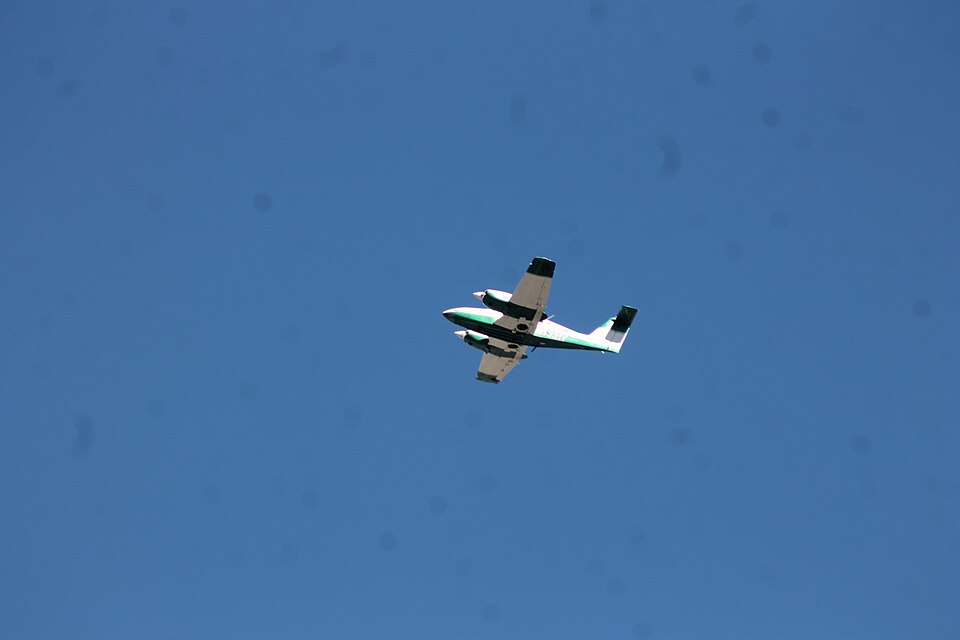

The Federal Aviation Administration (FAA) is investigating a reported stall characteristic in Piper PA-44 Seminole aircraft after an airplane rolled 60 degrees or more during a wings-level stall maneuver.
In an Airworthiness Concerns Sheet issued Nov. 24, the FAA said it was notified of an event in which the aircraft experienced a significant roll accompanied by a pitch-down and yaw at the stall. Similar behavior was observed with flap settings ranging from zero to 40 degrees.
The event occurred with three people aboard, and the FAA said the behavior may be more likely under that configuration. Under normal conditions, an airplane should roll no more than 15 degrees during wings-level stall onset and recovery.
The concern sheet applies to all PA-44 variants, including the PA-44-180 Seminole and PA-44-180T Turbo Seminole. The FAA is asking owners, operators and maintenance personnel to provide information about similar events to help determine the scope of the issue.
The agency is also seeking reports of abnormal stall behavior or directional-control issues, as well as any previously observed wing or control-surface abnormalities. These could include dents, flat spots, cracks or other changes to the wing’s contour or profile.
When submitting information, the FAA asks respondents to include the aircraft registration and serial number, total flight hours, purpose of the flight, and a description of the event. Details about the aircraft’s weight and center of gravity, seating configuration, flap and landing gear settings, engine settings, airspeed and altitude are also requested.
The FAA has not determined whether corrective action is necessary. The concern sheet is an information-gathering step, and the agency said its eventual response could include an Airworthiness Directive, a Special Airworthiness Information Bulletin or no further action.
The FAA is requesting responses within 30 days to support its investigation.

0 replies