
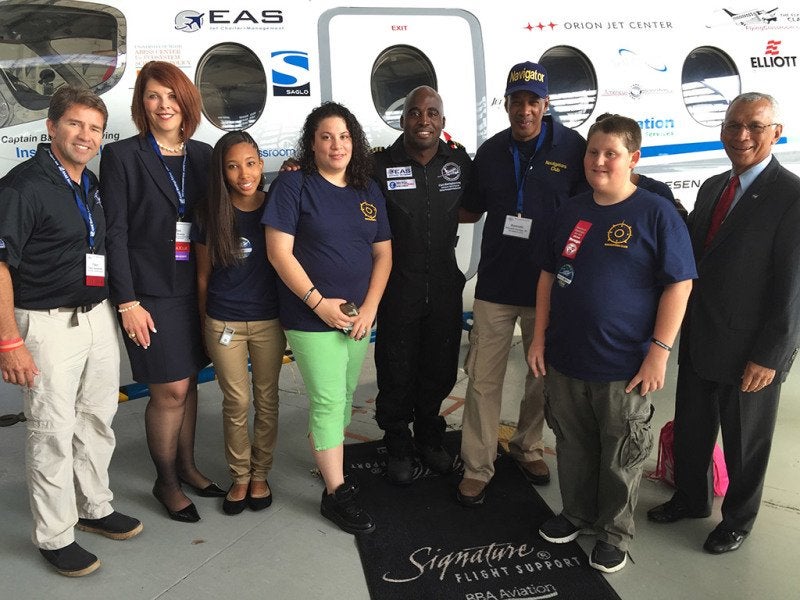
Barrington Irving, whose nonprofit group Experience Aviation encourages youth to study science, engineering and math, took off on the first leg of an educational flight around the world on Tuesday. Irving departed from Reagan Washington National Airport in a Hawker 400XP on loan from Executive Air Services in Miami. During the flight, Irving and his crew will visit North America, Asia and Australia. They will undertake 16 expeditions on land and sea and in the air, and will share those experiences via the Internet with students around the world. “This isn’t just an aircraft,” said Irving before departure. “It’s an exploration vehicle for learning that will engage and teach millions of kids in ways they’ve never been taught before — making them part of the expeditions and research.” Students can access information about the flight at FlyingClassroom.com.
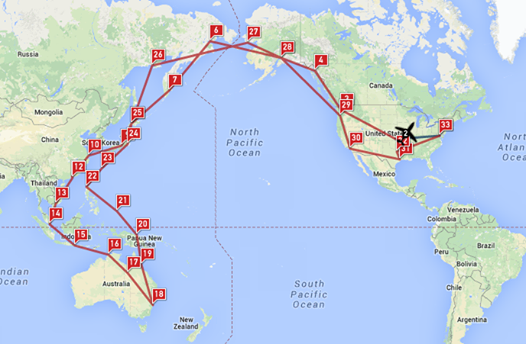
Students in schools that utilize the Flying Classroom curriculum will study lessons in science and math relevant to each expedition as they track the Flying Classroom team. In Montana, for example, Irving will meet a chef with a bionic arm and learn how the human brain can control robotic limbs. In Australia, he will explore how invasive poisonous toads have affected local ecosystems. Irving, who has been named an Emerging Explorer by the National Geographic Society, will also meet with NGS-funded scientists in Palau. He plans to call classrooms from the cockpit; broadcast live video from 45,000 feet; blog with students; collect atmospheric data; communicate with the International Space Station; and wear a NASA body suit that transmits his heart rate, blood pressure, and other vital signs. This first leg of the trip will continue through Nov. 18. Later segments of the journey will bring Irving and his team to all seven continents to participate in 75 educational expeditions.