
















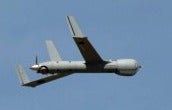
Facing increasing pressure from both industry and the military to allow greater freedom to unmanned aerial vehicles, the FAA is expected to start integrating small UAVs (generally 55 pounds or less) into the National Airspace System as soon as 2013, the National Defense Industrial Association said this week. The FAA formed a committee in June to create rules that would govern that integration. Rick Prosek, manager of the FAA’s unmanned aircraft program office, told the NDIA at a recent conference, “We are plowing through the small-UAS rule to put that on the street.” Under current rules, anyone who wants to fly a UAV of any size freely in the NAS must obtain an FAA waiver. The proposed new rules could be published as soon as December.
The new rules will detail the procedures for operators to launch, fly, and land the small UAVs, the NDIA said. In April, the Army demonstrated for the FAA a sense-and-avoid system using the MQ-1C Gray Eagle, at El Mirage, Calif., for over 11 hours, according to the NDIA. Pressure to allow UAVs more freedom to fly is building as used drones from the wars in Iraq and Afghanistan return to the U.S., but airline pilots and air traffic controllers warn against rushing. “We want to make sure, before this cake is taken out of the oven, it is fully baked,” said Sean Cassidy, national safety coordinator with the Air Line Pilots Association. Chris Stevenson, of the National Air Traffic Controllers Association, told the NDIA the introduction of unpiloted aircraft would alter virtually every page of their handbooks. “We have more questions than we have answers … This is a big, big cultural change,” he said. At the recent AOPA Summit, UAV industry expert Paul McDuffy spoke with AOPA’s Heidi Williams about the integration of UAVs in the NAS, and the impact on pilots; click here for a video of that 10-minute interview.

