

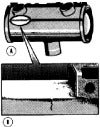
If the muffler on your reciprocating aircraft engine is more than 1,000 hours old, you should replace it to help minimize the chance of getting carbon monoxide in the cockpit, according to a Special Airworthiness Information Bulletin released by the FAA. The recommendation is not mandatory. The FAA based its suggestion on the results of a technical study by Wichita (Kans.) State University that was completed last year. The researchers surveyed accident data from the NTSB and found that when CO was a factor, the muffler system was the top source. In 92 percent of the muffler-related accidents, the muffler had been in service for more than 1,000 hours. Diesel-powered engines are not affected by this recommendation, Centurion Aircraft Engines said this week, because that combustion process produces hardly any excess CO.
The next revision of the FAA’s SAIB will make note of the fact that diesel engines are exempt, Centurion said. The FAA bulletin also noted that pilots should use CO detectors in the cockpit. The Wichita study, which is posted online (PDF), found that electrochemical sensor-based CO detectors were the most effective of the commonly used detectors and the instrument panel was the most effective location.