
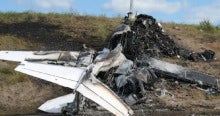
Pilots as well as maintenance workers need to know that the tires on transport-category aircraft require careful monitoring, the NTSB said this week. The board released a list of safety recommendations (PDF) on Wednesday stemming from its investigation of a fatal Learjet 60 crash in 2008. Tires can lose pressure so quickly that within a few days they are dangerously underinflated, even though the underinflation is not visually apparent. The board also said pilots should be allowed to perform pressure checks on tires, regardless of whether they are operating under Part 91 or Part 135. Also, the NTSB said the frequency of pressure checks should be mandated by the FAA.
The FAA should also require that tire testing criteria reflect the actual static and dynamic loads that may be imposed on tires both during normal operating conditions and after the loss of one tire, and consider that conditions may be less-than-optimal, the board said. In the 2008 accident, all four main gear tires failed during the takeoff roll. The crew attempted to stop on the runway, but hit a berm and caught fire. Four people died and two were seriously hurt.